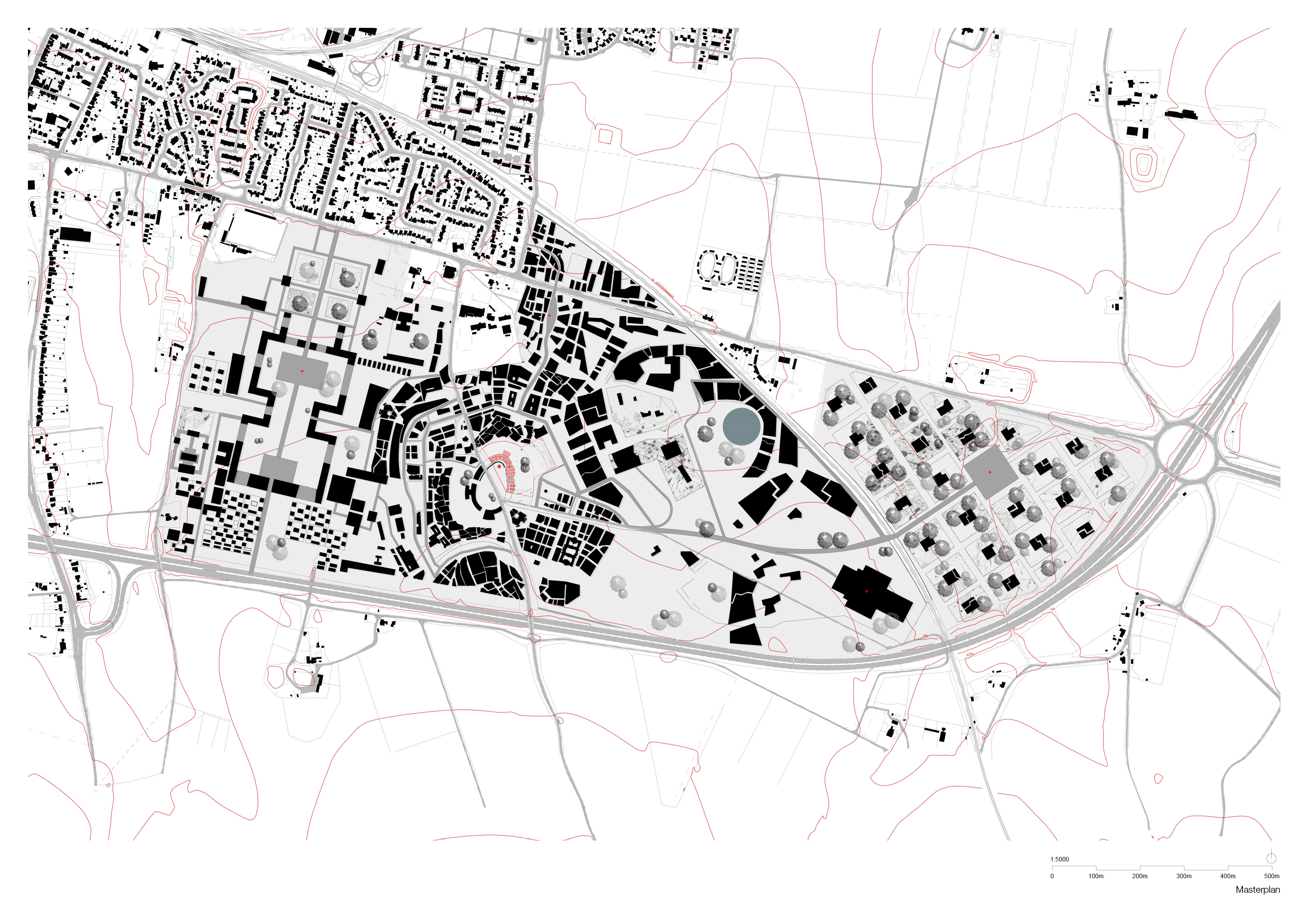
The School of Wonders is designed as an architectural journey of growth, carefully guiding pupils through the three foundational milestones of primary education. Located in Southeast Faversham, a proposed extension of the existing town, the masterplan was inspired by a walk through its historic streets. The design directly responds to the striking visual contrastzbetween Faversham’s timber-framed structures and its vibrant facades, creating a deliberate dialogue between single-material volumes and rich, multi-material surfaces.
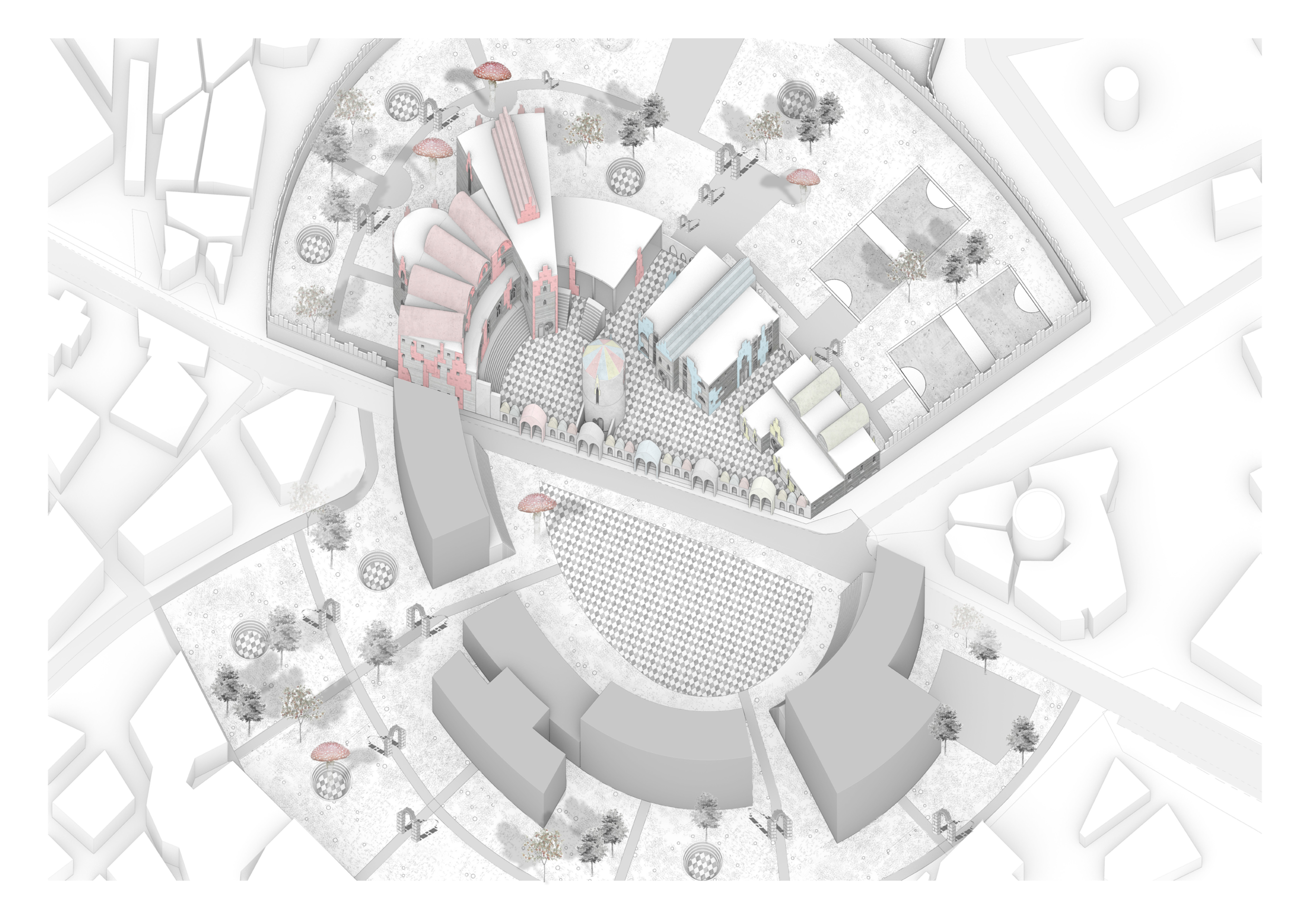
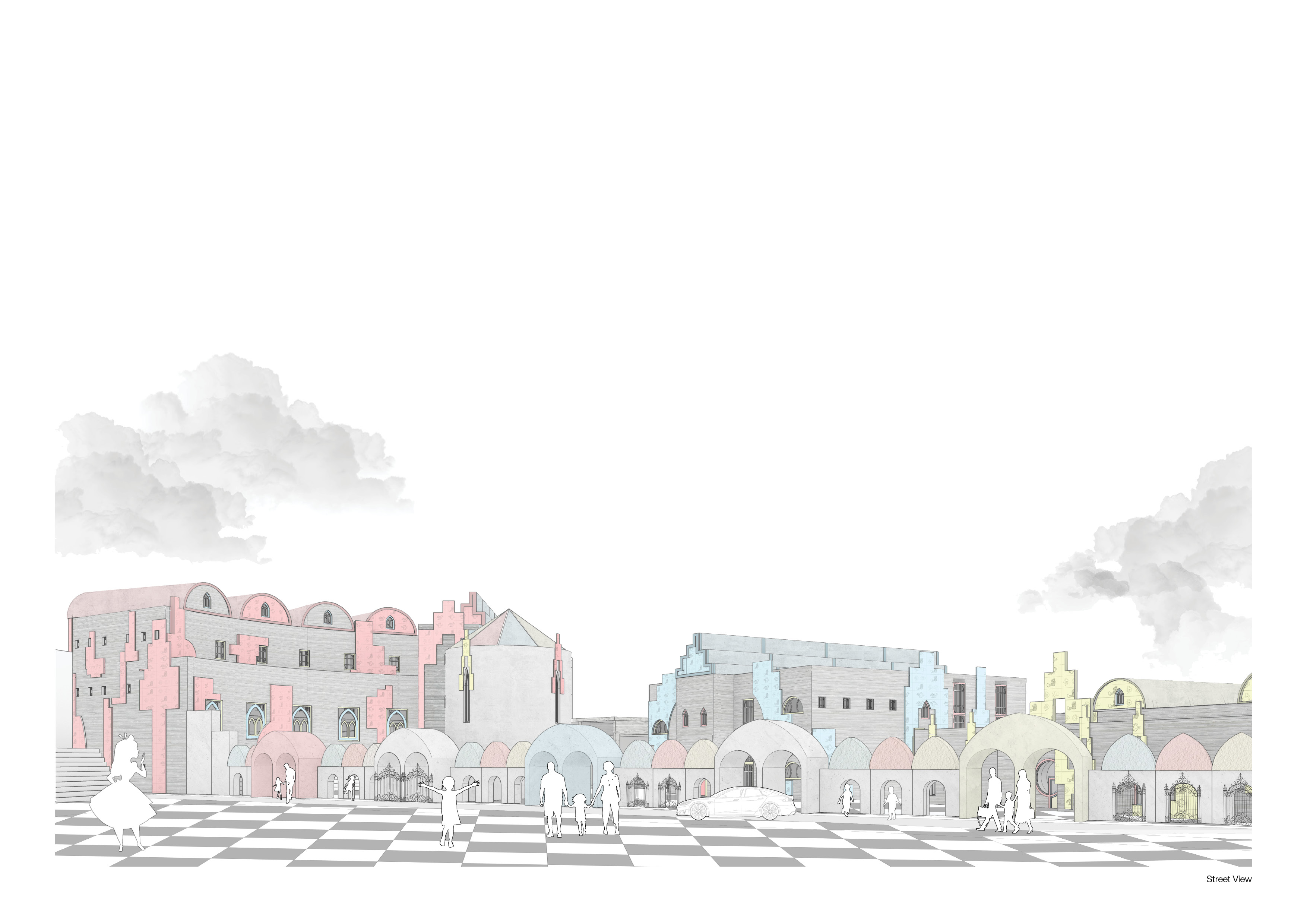
Conceived as a “miniature Faversham”, the site is organized into distinct sectors. Each zone features its own specific tower, unique planning logic, and tailored facade aesthetic. At the literal heart of this masterplan, where the aesthetics of thesurrounding sectors collide, sits the school. Its circular form is bisected by the main road and integrated with civic space, creating an energetic central hub that physically pulls the surrounding neighborhood towards it.
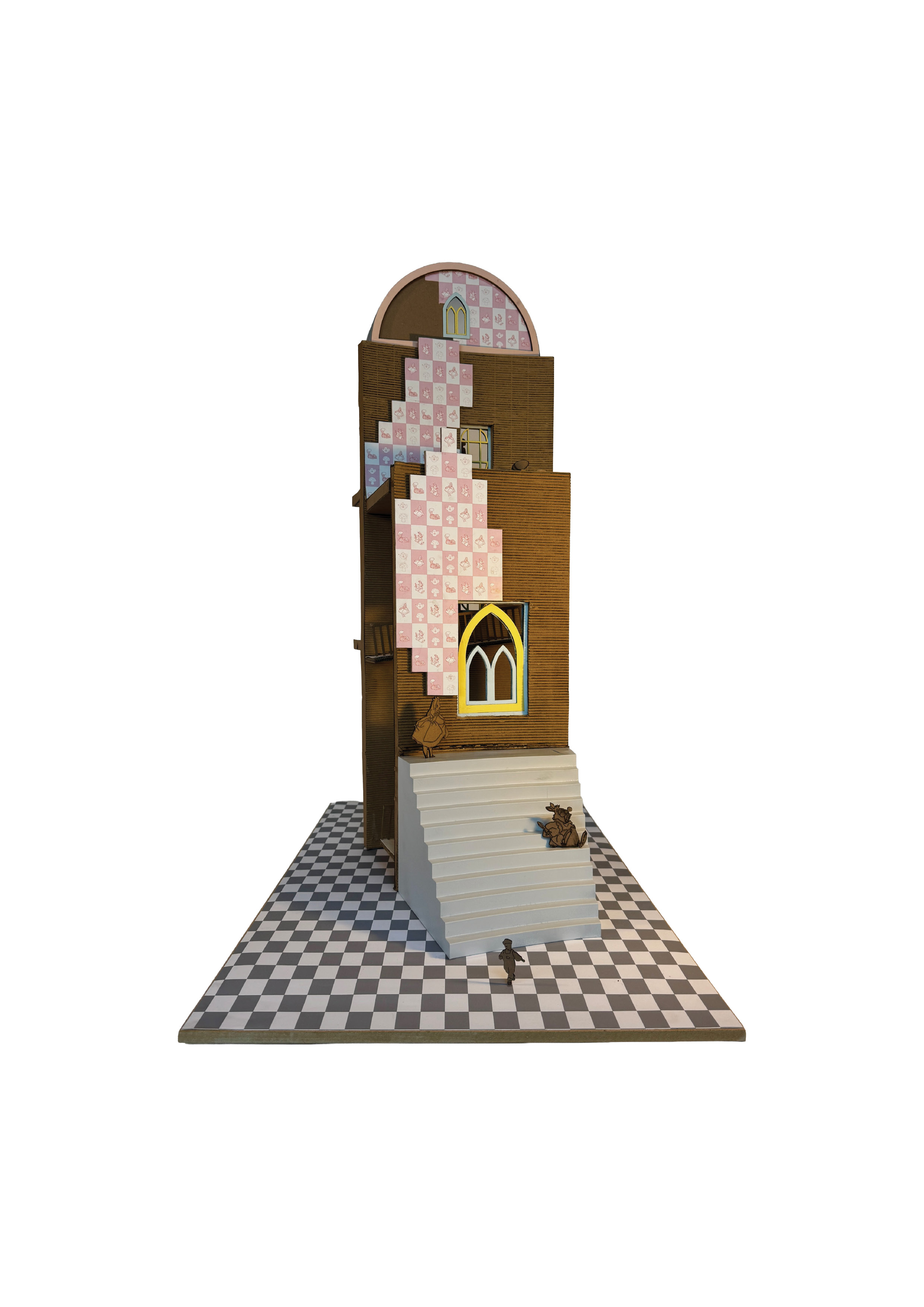
Positioning the school centrally establishes education as the primary pillar of the community. Drawing inspiration from Aldo Rossi, the central sector’s tower serves as a public library with an independent entrance. Rossi’s theater steps are also integrated to mimic an Italian plaza, allowing the school to function as a “small city” where the plaza and public gallery act as the civic heart.
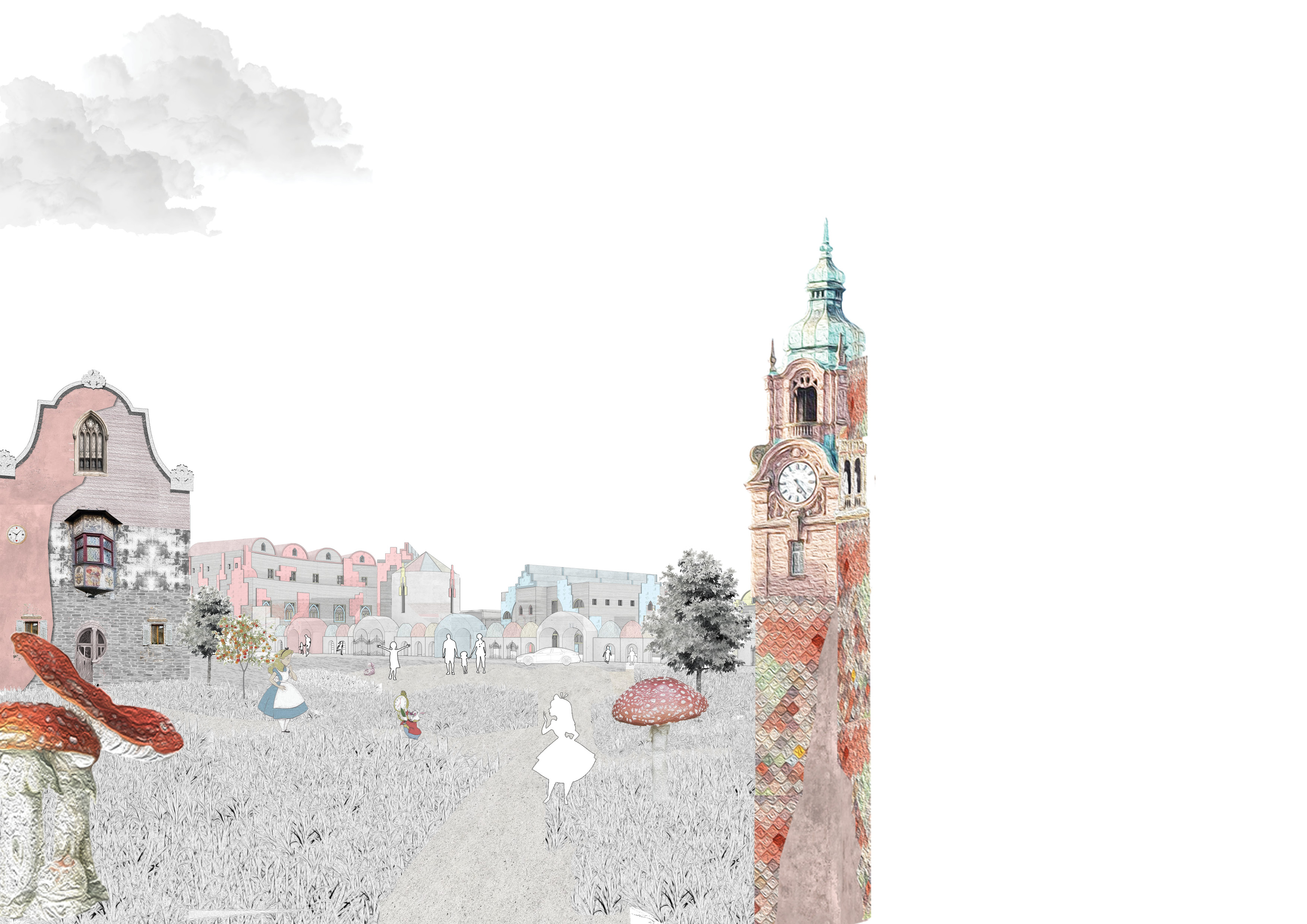
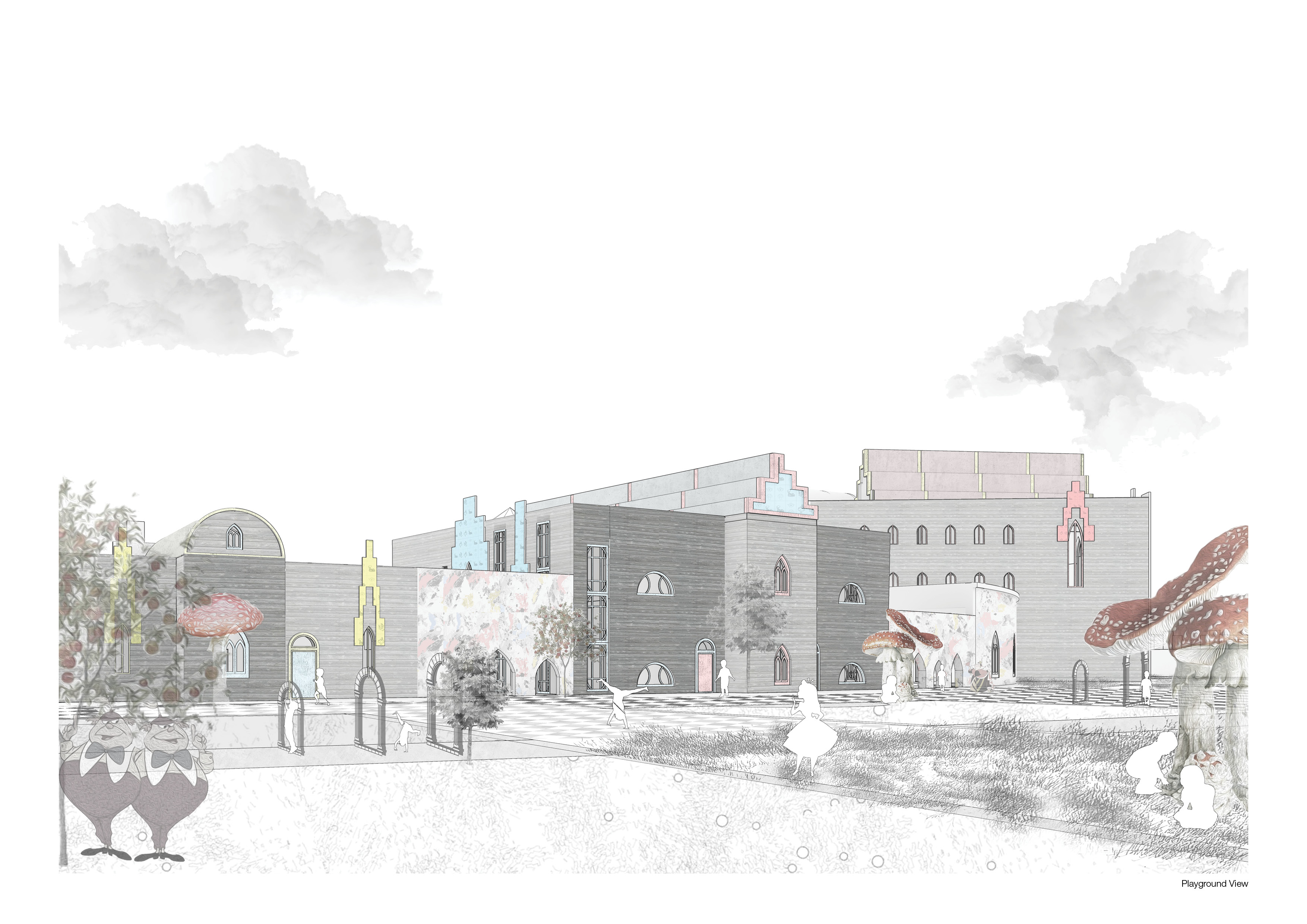
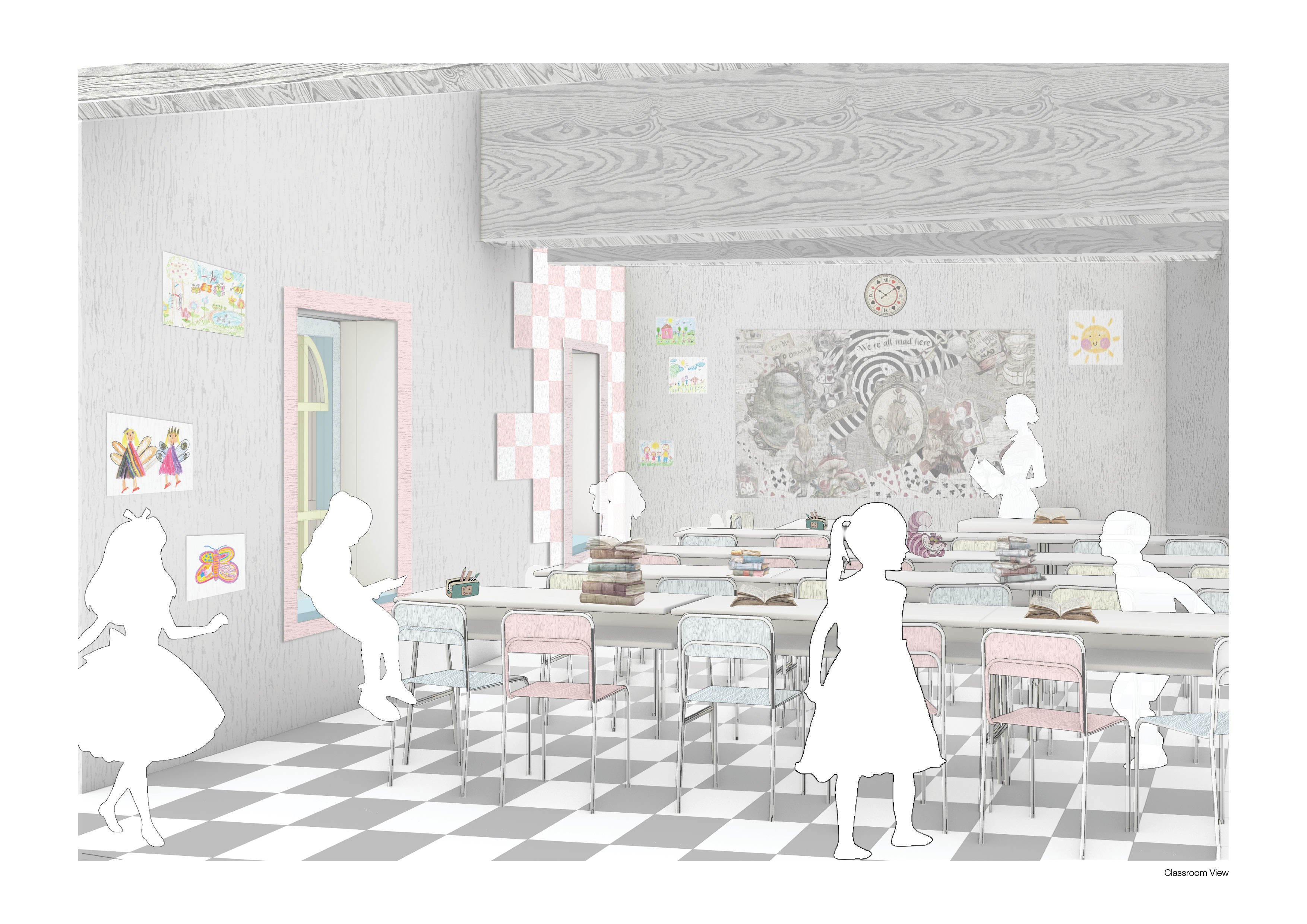
Whimsically influenced by Alice in Wonderland, the design plays with spatial distortion to make pupils feel empowered. “Rabbit holes”, stepped circular outdoor seating, and small-scale gates allow only children to pass through specific thresholds. To visualize this journey, the school is split into three distinct, color-coded buildings: Reception (small/Yellow), Key Stage 1 (medium/Blue), and Key Stage 2 (large/Pink). Ultimately, this school is a living story where architecture documents a pupil’s evolution.
 Architecture
  Jack Cirket | Architecture