MA Interior Design — From Material Experimentation to Circular Co-working
My MA Interior Design journey has been an exploration of how sustainability, circular design and material thinking can inform more adaptable and meaningful interior environments. Throughout the course, I developed my practice through research, experimentation and making, questioning how interiors can respond to changing patterns of use while reducing dependence on fixed and disposable elements.
My early explorations investigated the potential of reused and unconventional materials, including cardboard furniture, paper-mâché construction and material-based spatial interventions. These experiments allowed me to investigate material behaviour, construction methods, tactility and the relationship between making and design thinking. Rather than treating sustainability as an aesthetic outcome, I became increasingly interested in the life cycle, adaptability and continued value of materials within an interior.
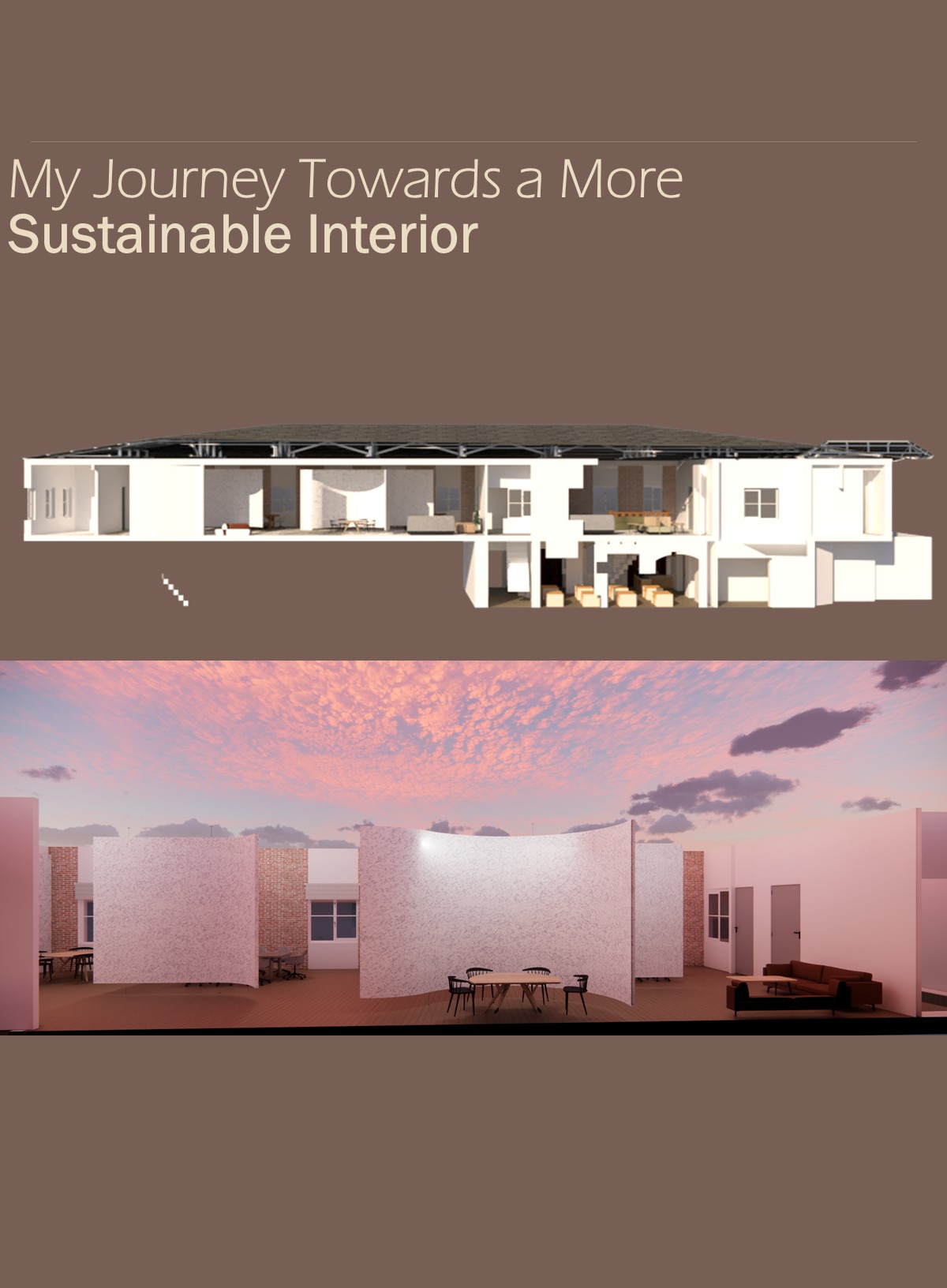
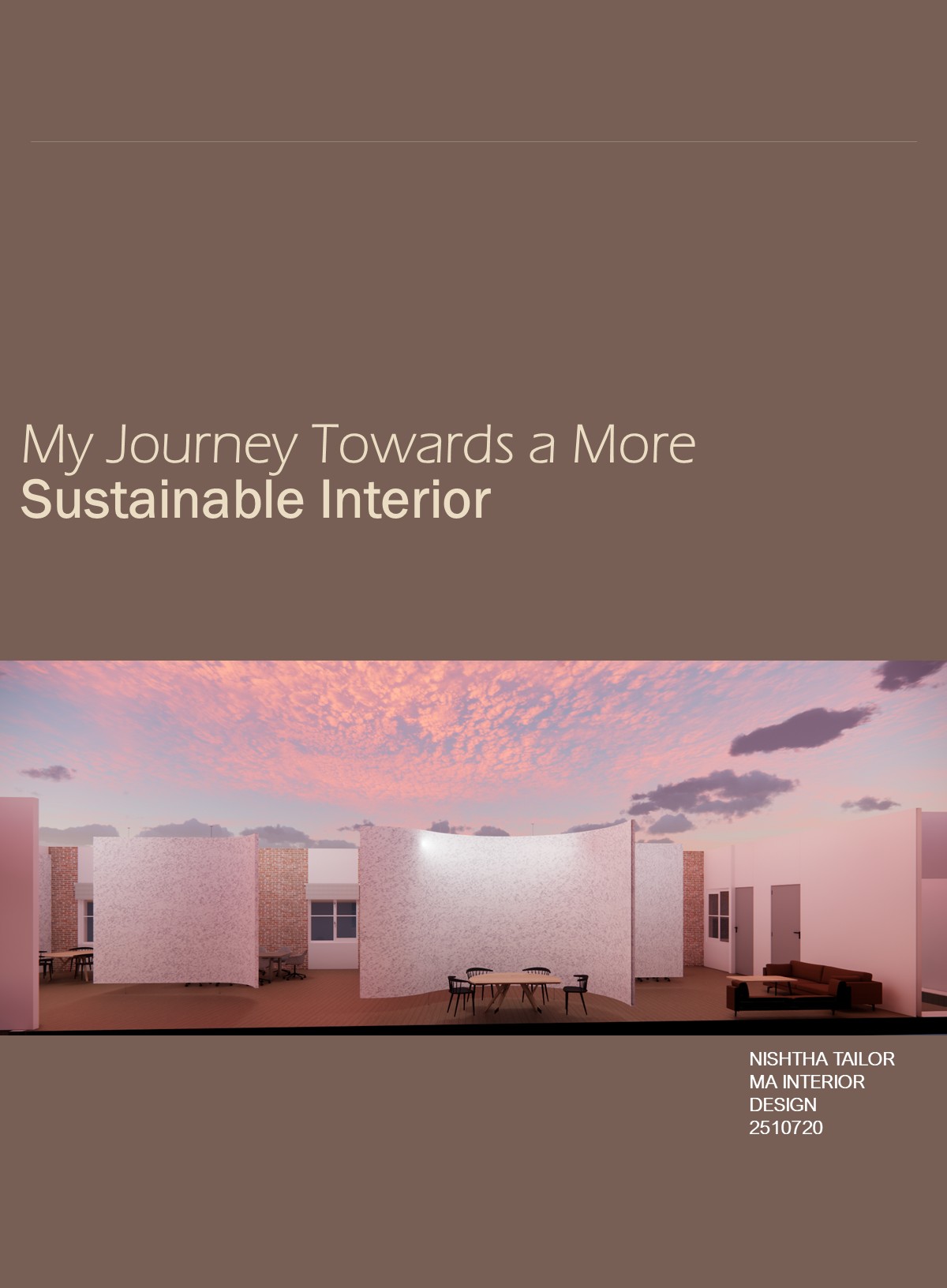
These investigations developed into my final project: a co-working space in Canterbury. The project examines how interior environments can support both individual concentration and collective interaction while remaining flexible to changing user requirements. My research considered the relationship between space, user interaction, materiality and circularity, leading me to question conventional fixed workplace furniture and spatial arrangements.
A key outcome of the project is a dismantlable timber table system designed to move beyond the conventional individual café/work desk. The system can be connected and reconfigured to accommodate different group sizes and patterns of collaboration. Its ability to be dismantled, adapted and potentially reused became a practical exploration of circular design principles at the scale of furniture and interior detail.
Through this journey, my practice has shifted from designing primarily around form and appearance towards a more research-led and critical approach, where materials, construction, user behaviour and longevity are considered together. The MA has strengthened my interest in developing interiors that are not only aesthetically considered but also adaptable, resource-conscious and responsive to future needs.
I see this project as a foundation for my developing professional practice in sustainable and circular interior design, combining creative experimentation with practical research to explore how interiors can contribute to more responsible ways of living and working.
 Interior Design
  Prabhjot Kaur | Interior Design