O.I. (Organic Intelligence) (2026)
Installation
Plants, Ewaste, Second hand objects, Live Insects
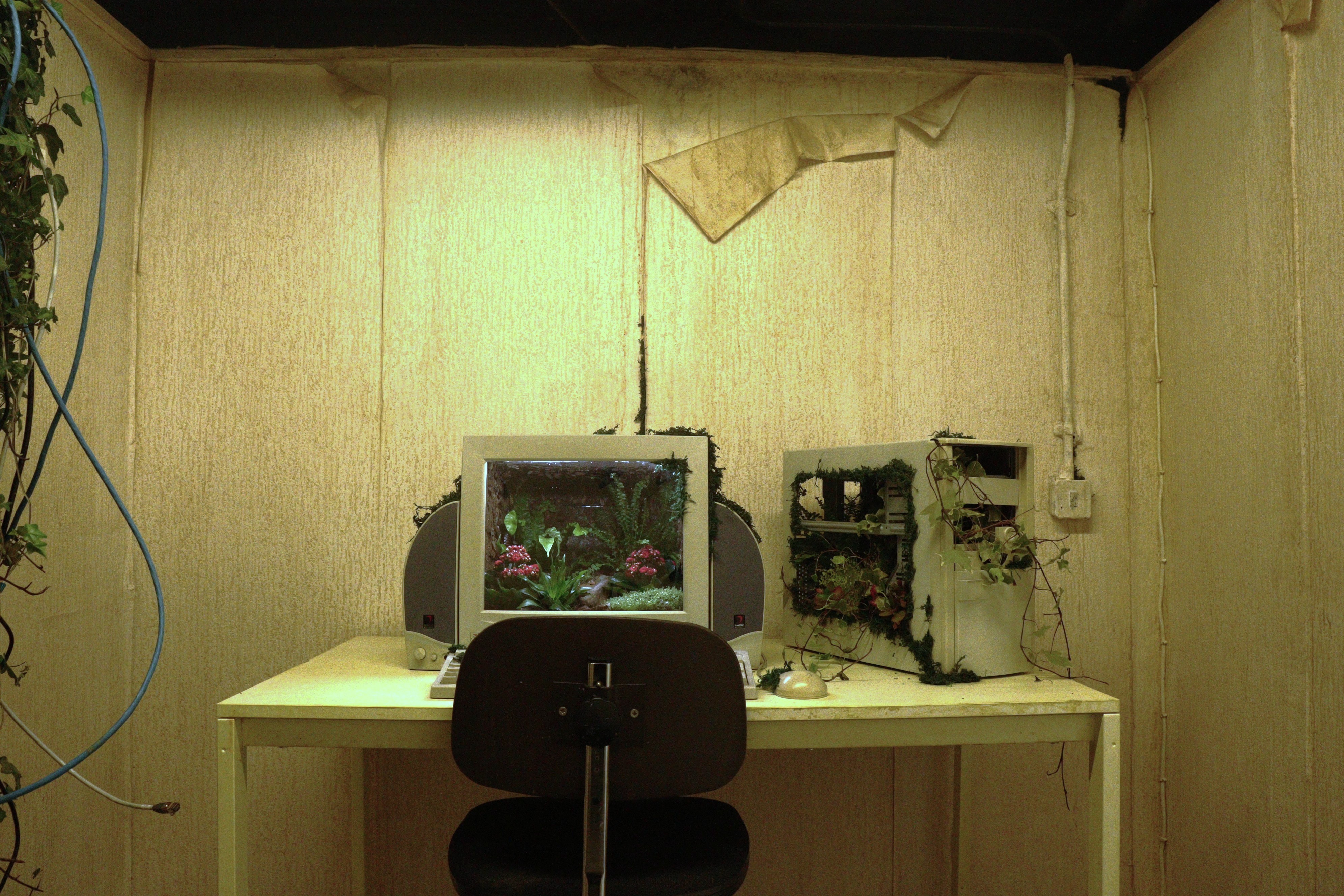
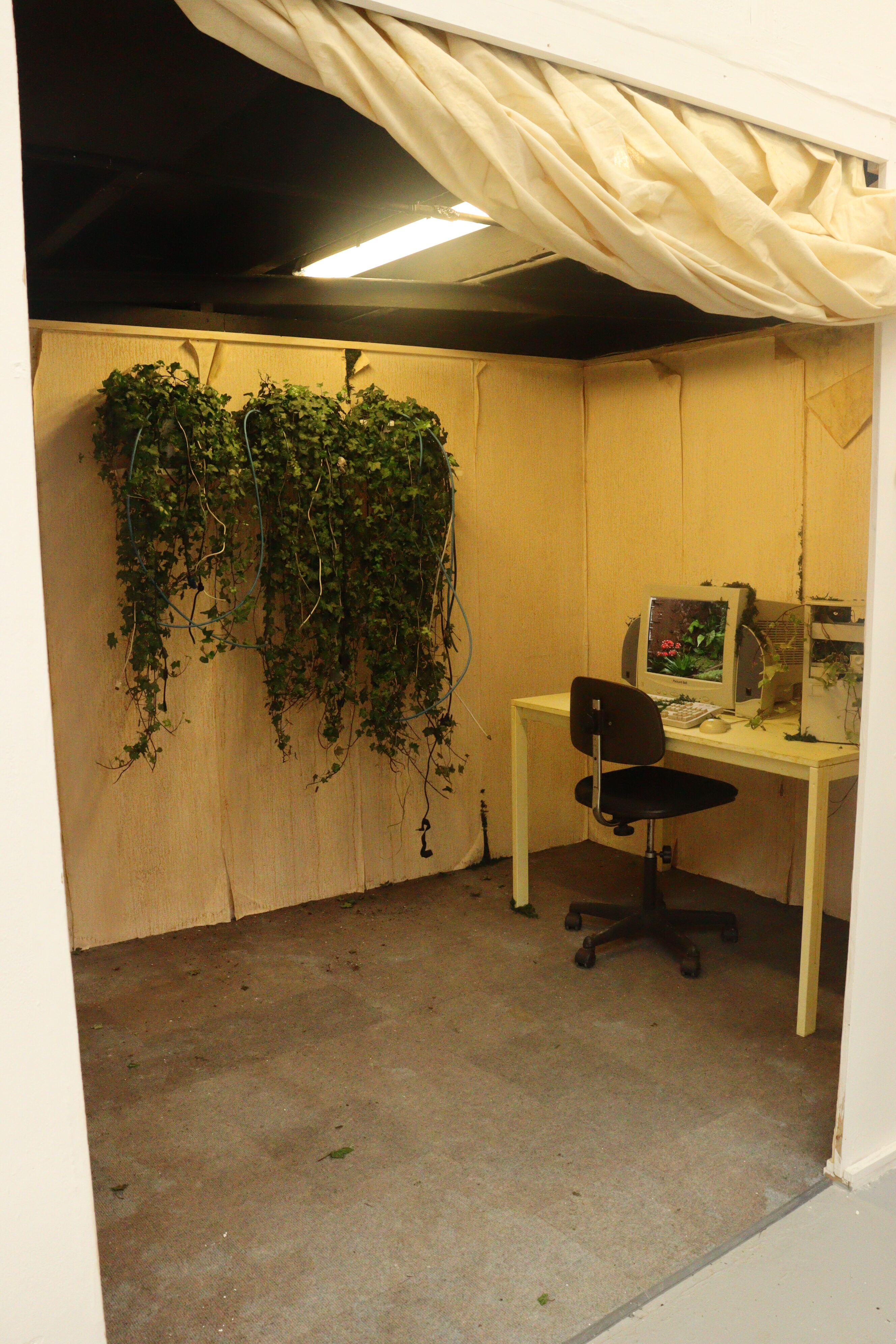
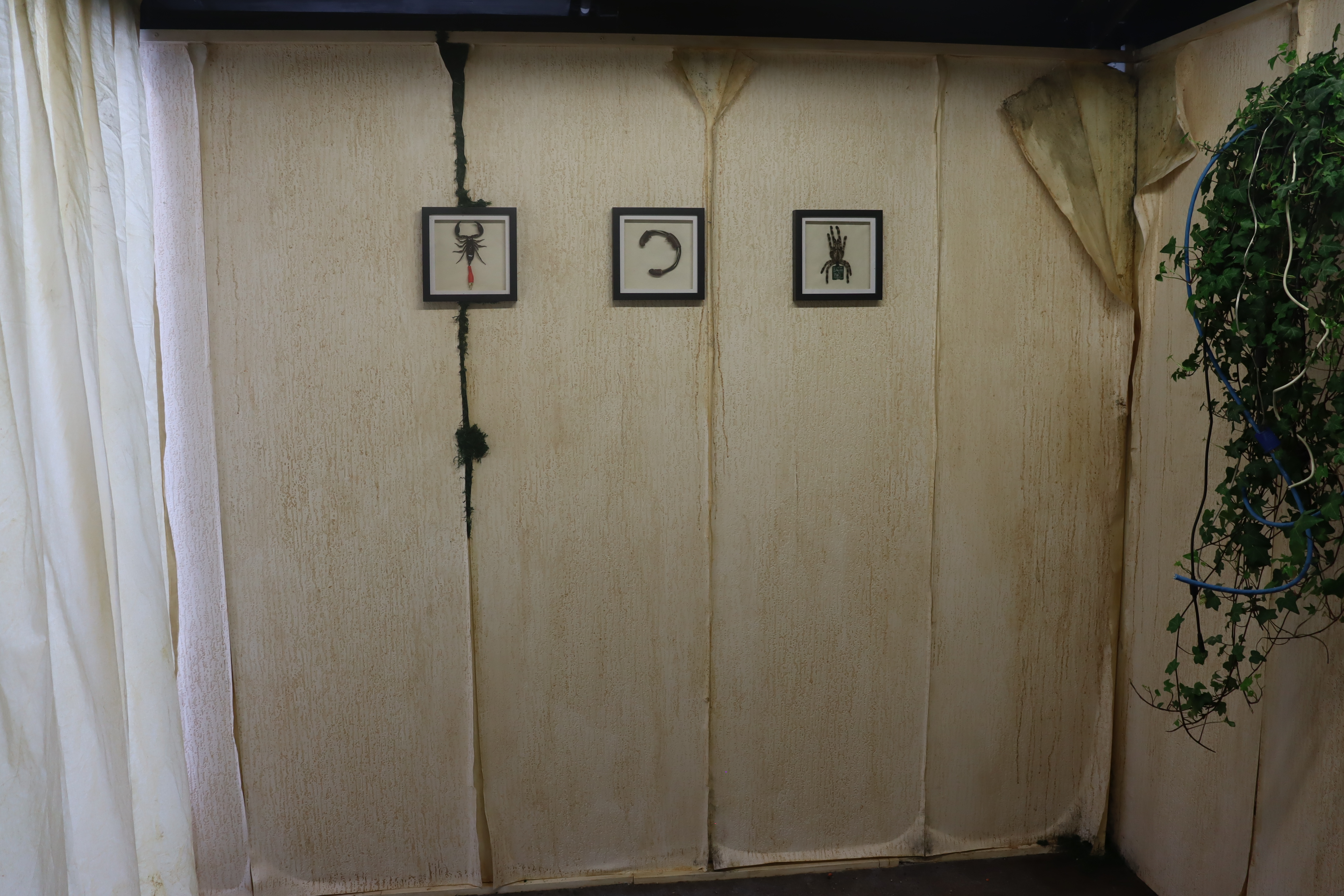
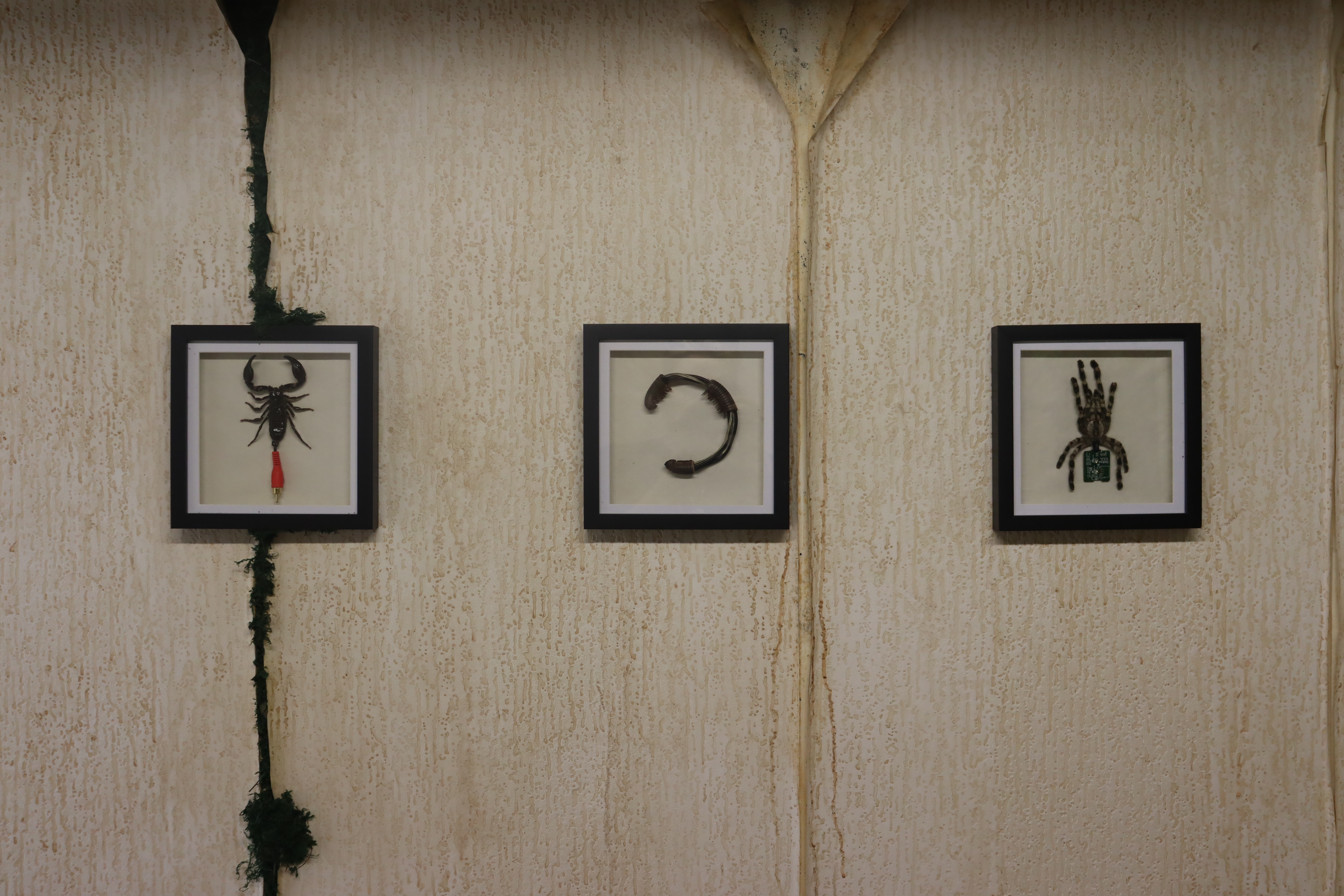
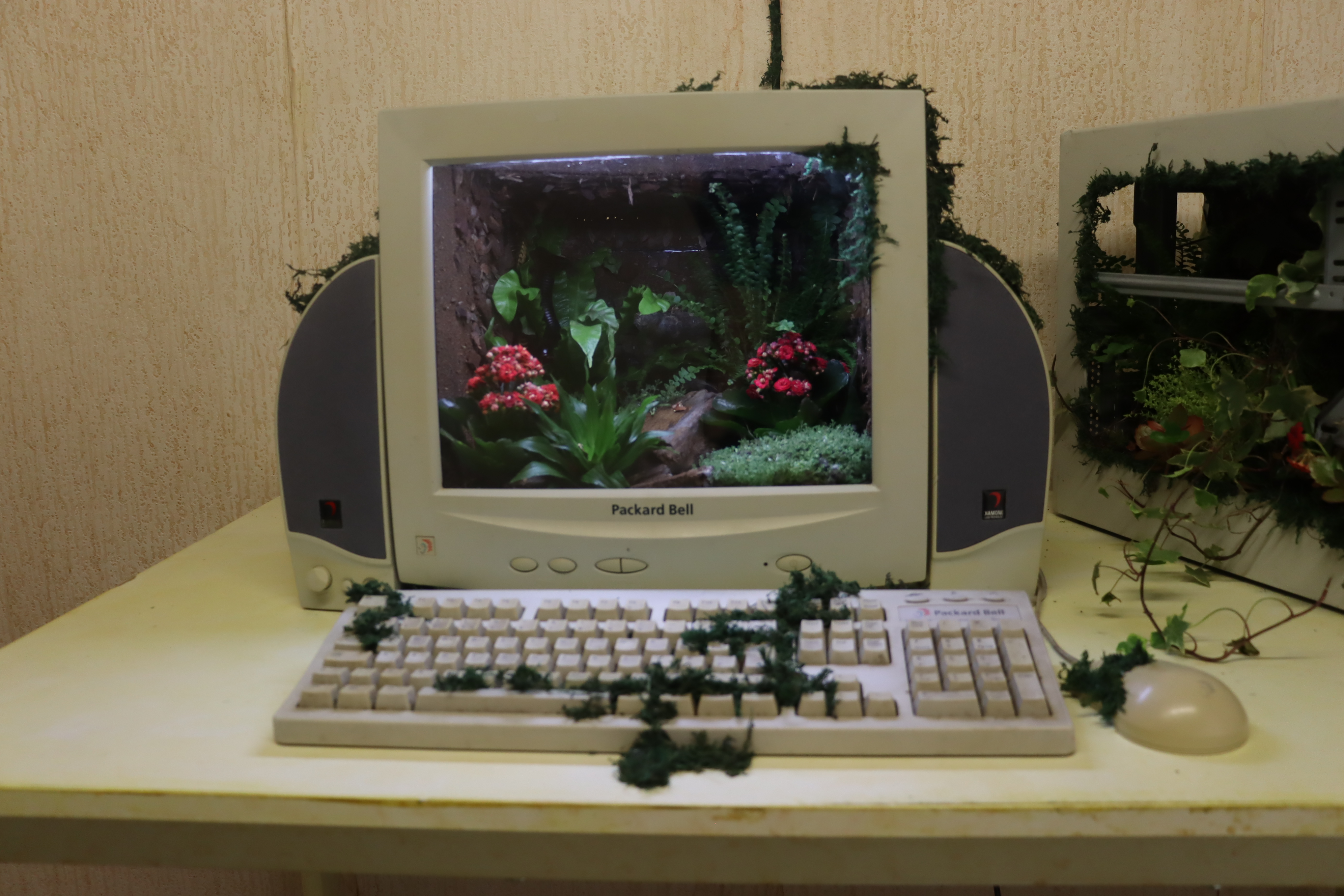
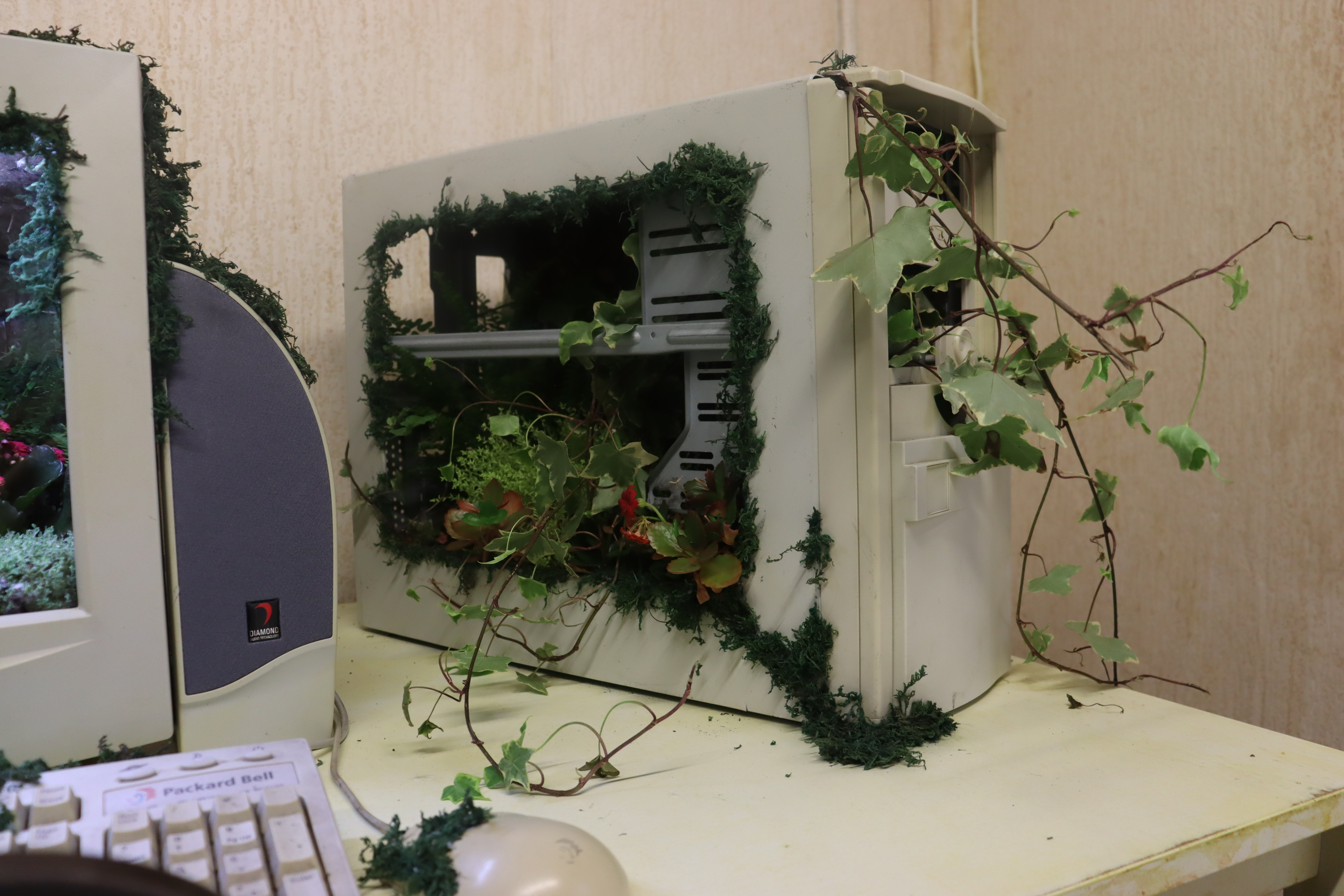
O.I. is an enclosed heterotopia which explores an alternate reality through the simulation of an abandoned office space from the 1980’s, belonging to the company O.I. (Organic Intelligence), which produced cybernetically enhanced organisms, specialising in plant life and invertebrates meant to serve humans and replace living pollinators. The history and the actions of the company are lightly gestured at throughout the piece, allowing audience contemplation and interpretation of the piece.
The abandoned, dilapidated state and the invasion of the natural world in the space indicate the current state of the world surrounding this environment. The absence of human interference and reappropriation of these inherently human spaces gives agency to the inhuman. The enclosed space creates a claustrophobic feeling, which is juxtaposed by the soothing ambient sound, providing a sense of serenity in the absence of humans. This causes the audience to feel relaxed but unwelcome in the space, creating a unique experience for the viewer, which forces them to reflect on the human imprint and the relics that we leave behind, posing further suggestions about human extinction and the ramifications of it.
O.I poses commentary on global warming, depletion of finite natural resources, and capitalistic technological progression without consideration of sustainability. It also echoes themes explored throughout Karel Čapek’s work, which question the ethics of the creation of artificial life for the purpose of servitude, and the repercussions of that. This then draws parallels to the attitudes surrounding contemporary advancements in artificial intelligence.
Paige Dexter is a multidisciplinary artist specialising in mixed media, utilising e-waste and organic materials to address environmental concerns. Her work is influenced by her personal mental health challenges, including OCD and intrusive thoughts related to eco-anxiety. The narratives within her pieces explore research on the detrimental effects of technological advancements such as artificial intelligence (AI), and critically examine the ethical implications of using generative AI. Through her art, she aims to empower nature by personifying it, enabling it to articulate its perspective.
 BA (Hons) Fine Art - Canterbury
  Farrell Irfan | Fine Art