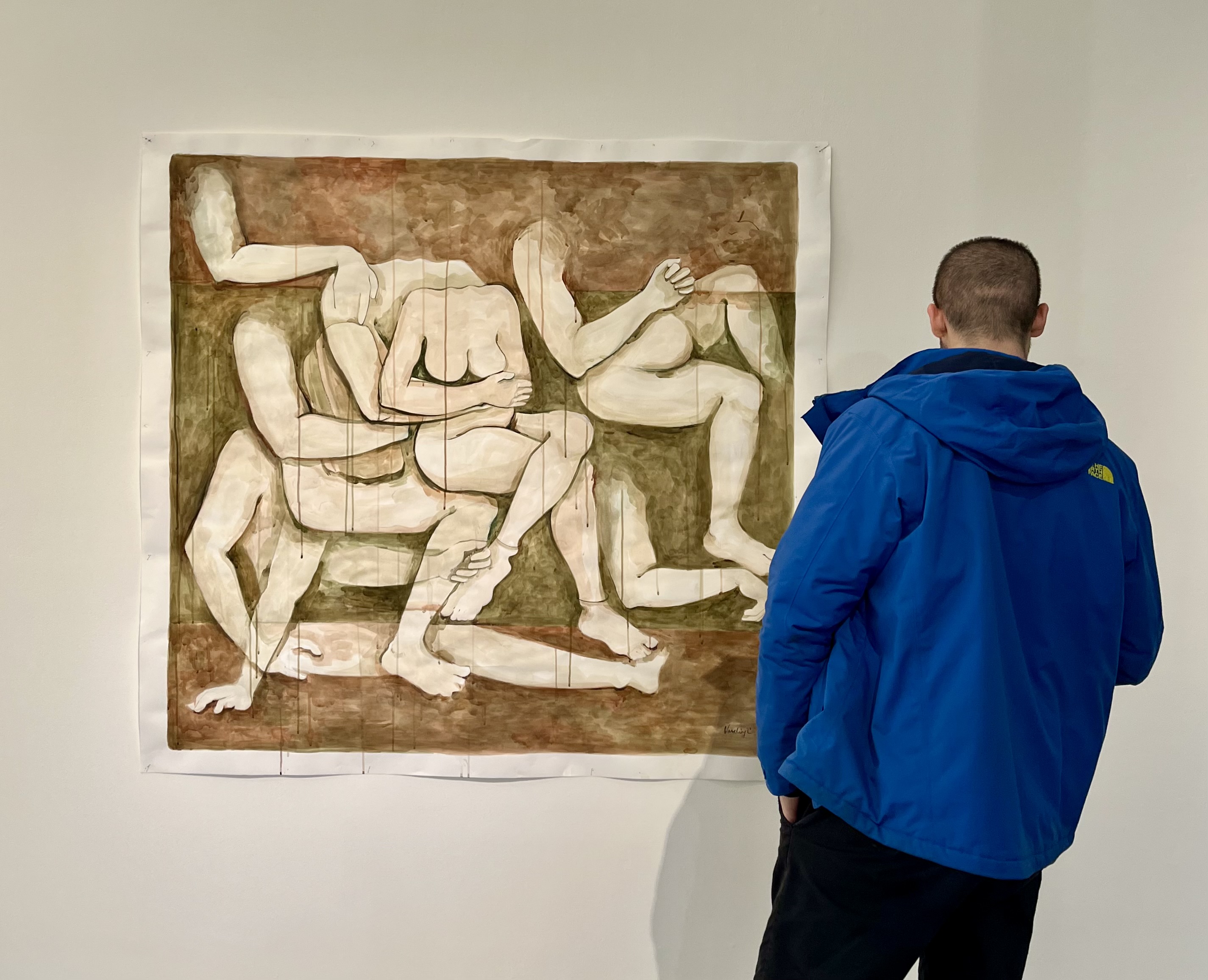
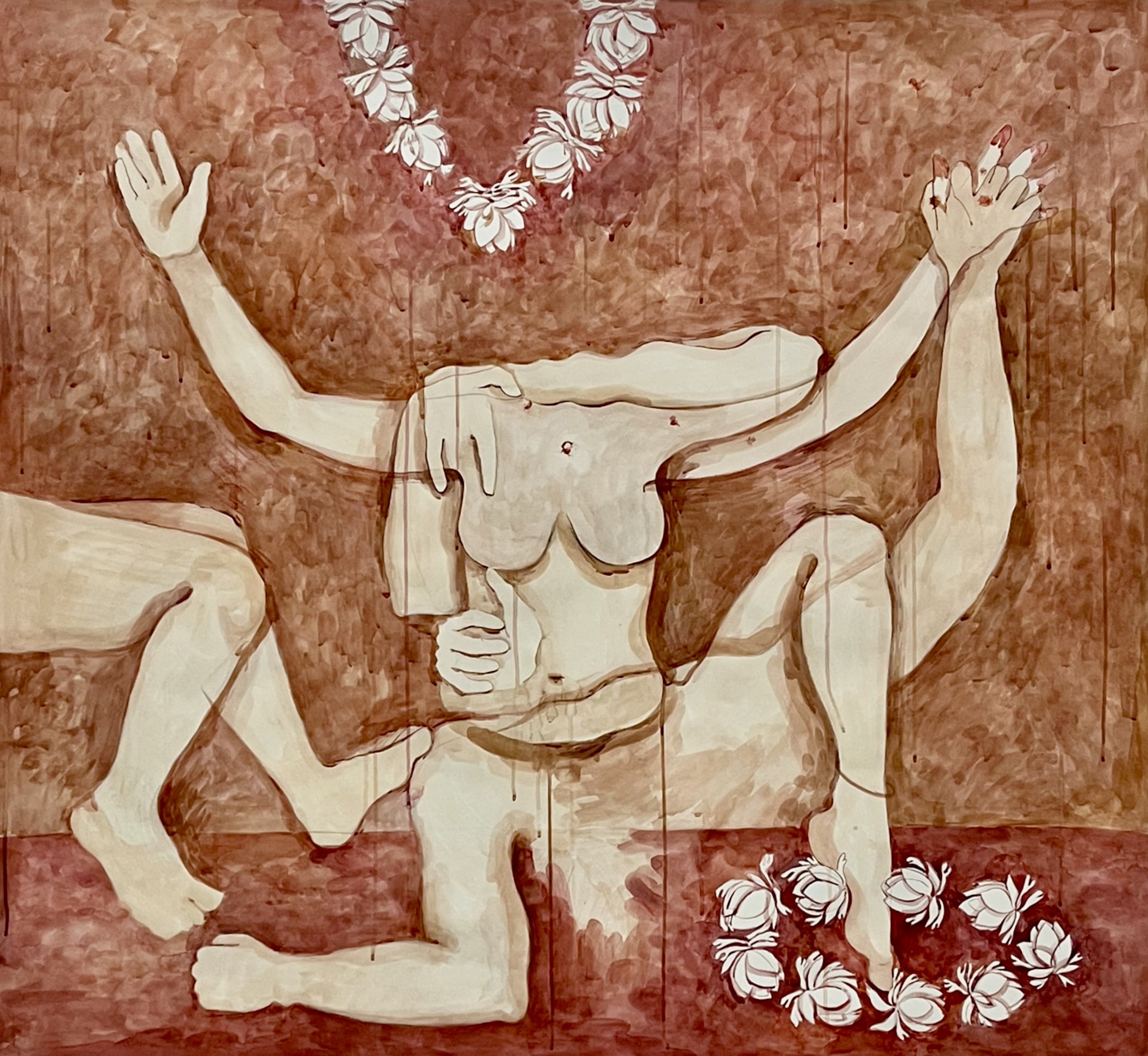
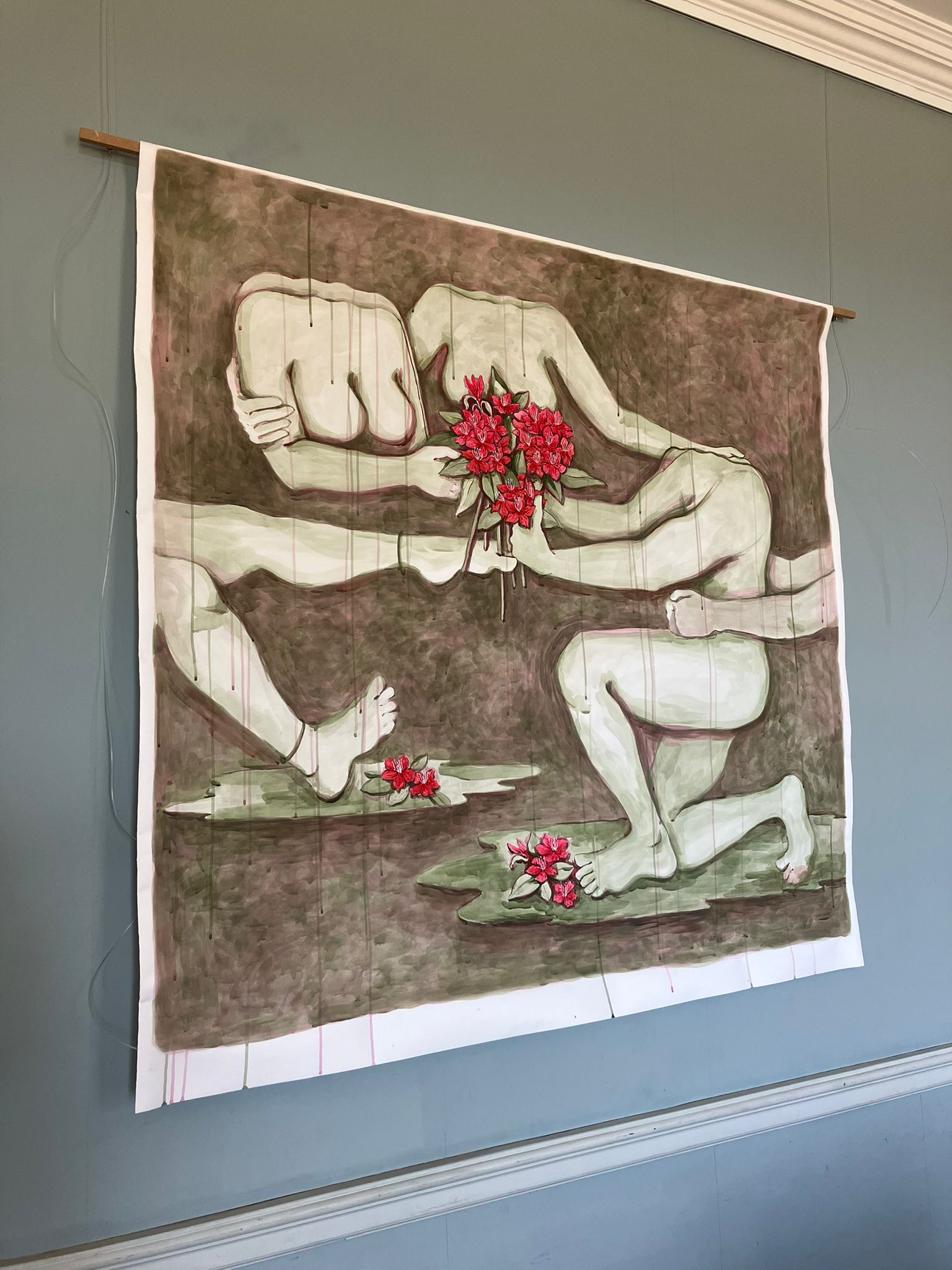
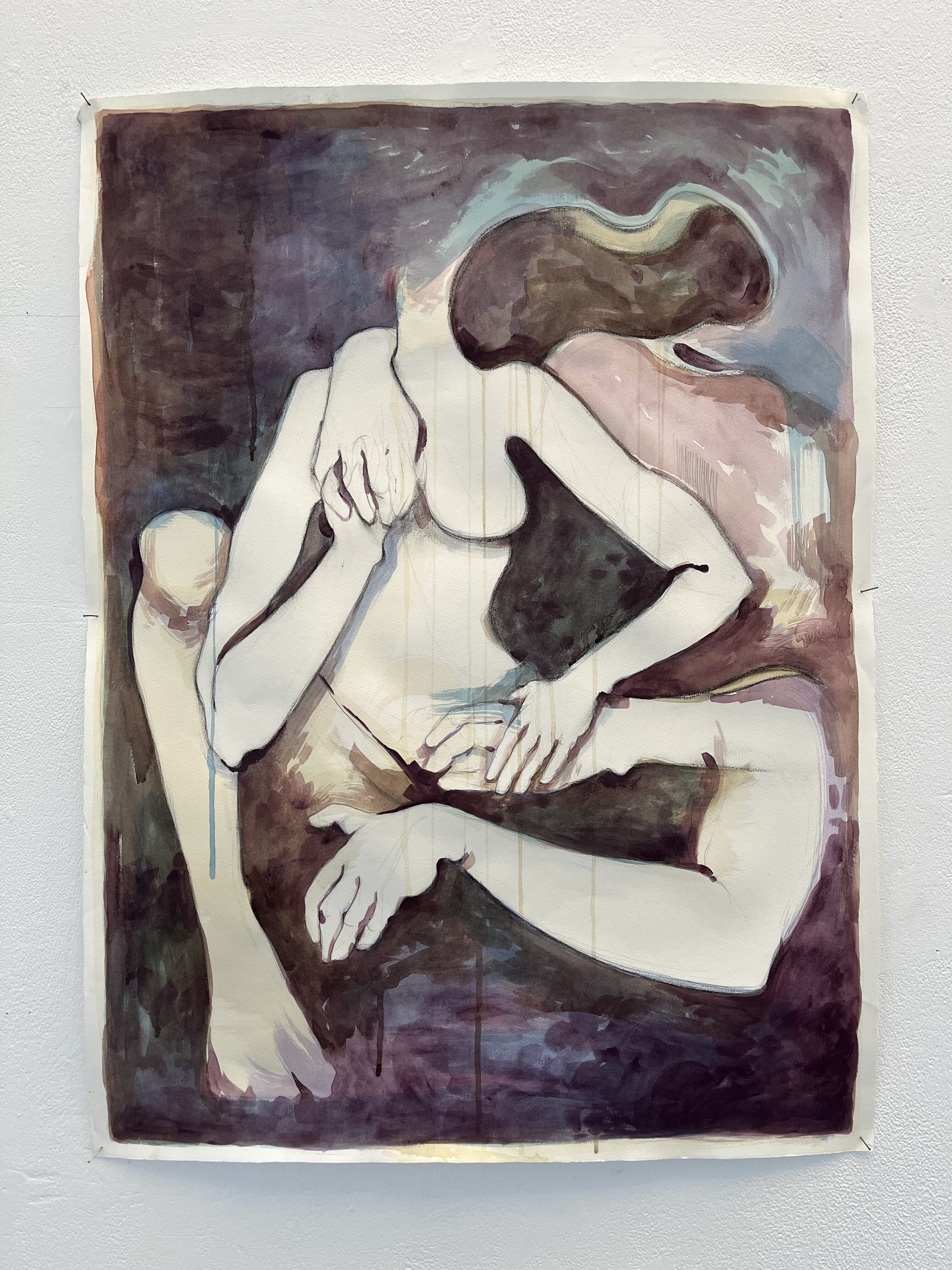
“All my life, I’ve seen women either reduced to their bodies or placed on a pedestal as divine beings within patriarchal societies. Both positions take away from women’s humanity, leaving them fragmented. Beyond this, their own desires are rarely considered valid and are often met with shame. As an act of reclaiming agency, I reenact these gestures in my paintings to address the reality of wanting to be wanted.”
Varshini Chandrashekar is an Indian fine artist and art educator based in United Kingdom. Primarily a figurative painter, her multidisciplinary practice also spans sculpture and photography.
She holds an MFA in Fine Art from University for the Creative Arts, Farnham, and a BVA from the College of Fine Arts, Karnataka Chitrakala Parishath, Bengaluru. Her work has been exhibited in India and the UK, including at Heathland Artworks, Surrey, the Crafts Study Centre, Farnham, and 1Shanti, Bengaluru.
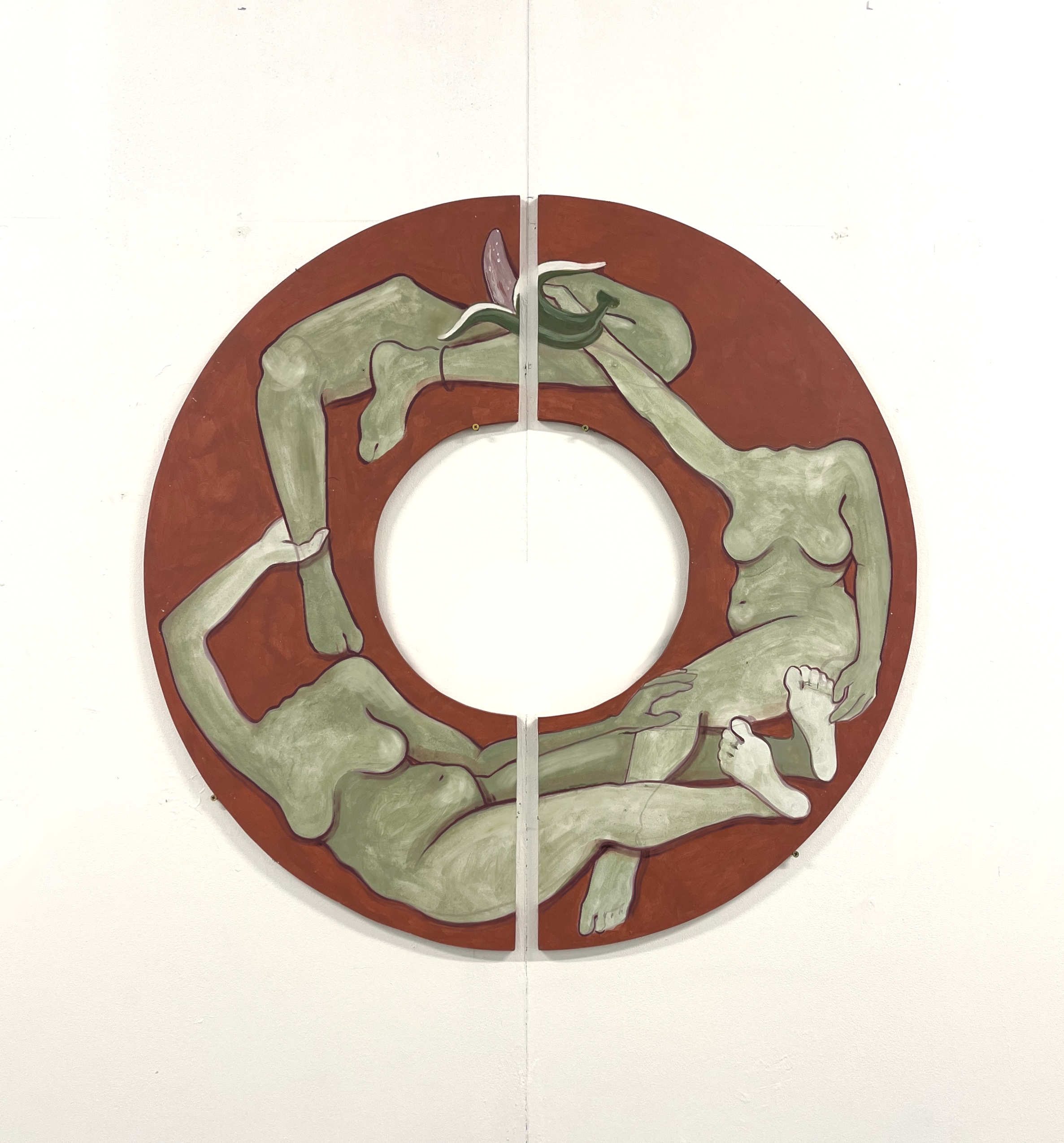
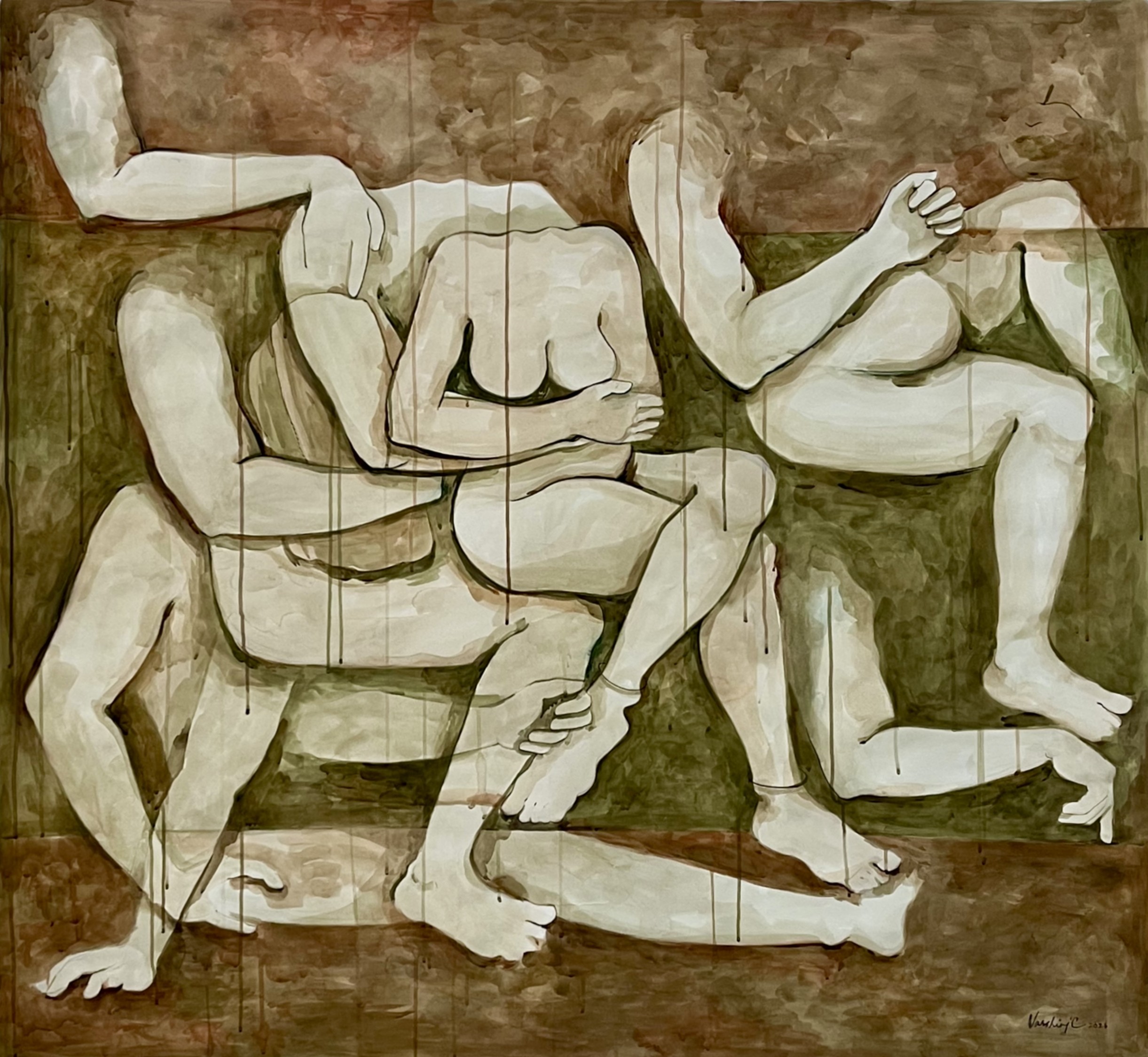
Wanting to Be Wanted is an ongoing exploration of female desire and the desire to be desired. It emerges from the observation of complicated human need to be chosen by another person. At the centre of this project is a question that continues to shape both her life and artistic practice: what does it mean to want, and what happens when the desire to be wanted begins to shape the way we see ourselves?
Growing up as a sheltered and overprotected woman in India, Varshini became increasingly aware of the contradictions surrounding female desire. Women are often sexualised and objectified while simultaneously being taught to feel ashamed of their own desires. Through painting, she explores these tensions using fragmented bodies, exaggerated gestures, intertwined limbs, and symbolic imagery. The figures often exist without complete identities or faces, becoming bodies caught between the male gaze, the embodiment of shame, and gestures of touching and withdrawing. Repetition in mark making and painterly gestures reflect the free flowing nature of desire and the ways in which people land at certain emotions, memories, and relationships.
Ultimately, this ongoing project transforms private experiences of desire, shame, rejection, and longing into shared visual narratives, creating space for viewers to recognise something of themselves within the work.
 Fine Art
  Durga Shree | Fine Art