This project reimagines the Historic Dockyard Church as a contemporary learning and cultural hub for young people aged 15–25. The design explores how heritage architecture can be adaptively reused to support education, collaboration, and intellectual exchange while preserving the spatial integrity of the original structure.
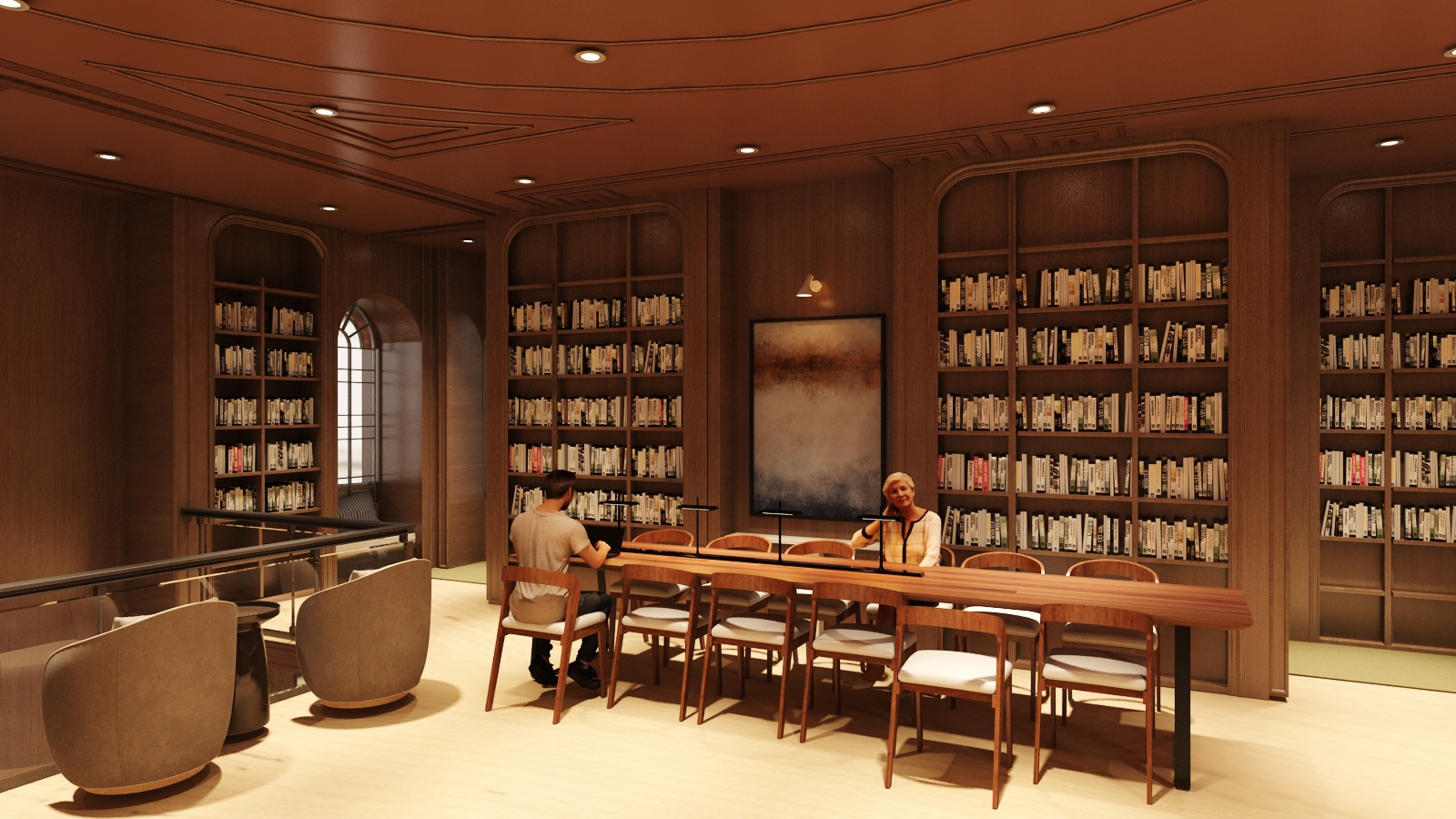
Through spatial layering, programmatic zoning, and sensitive material contrast, the proposal introduces archive interaction areas, immersive digital research zones, public lecture spaces, and quiet study environments within the preserved church volume. The intervention respects the historic fabric — exposed brick, timber trusses, and verticality — while integrating modern digital interfaces and lighting strategies.
The accompanying collage articulates user experience and spatial differentiation, illustrating how teenagers and young adults engage with maritime history through exploration, discussion, and focused study. The project positions adaptive reuse not only as architectural preservation, but as a framework for cultural continuity and contemporary relevance.
 BA (Hons) Studio Practice (Interior Design)