I approach architecture as a dialogue between climate, material, and human experience. My work explores how environmental processes can shape spatial narratives and how atmosphere, light, and water can become active design elements rather than passive conditions. The idea that architecture should evolve with change motivates me, as it responds to nature’s rhythms and the community’s needs.
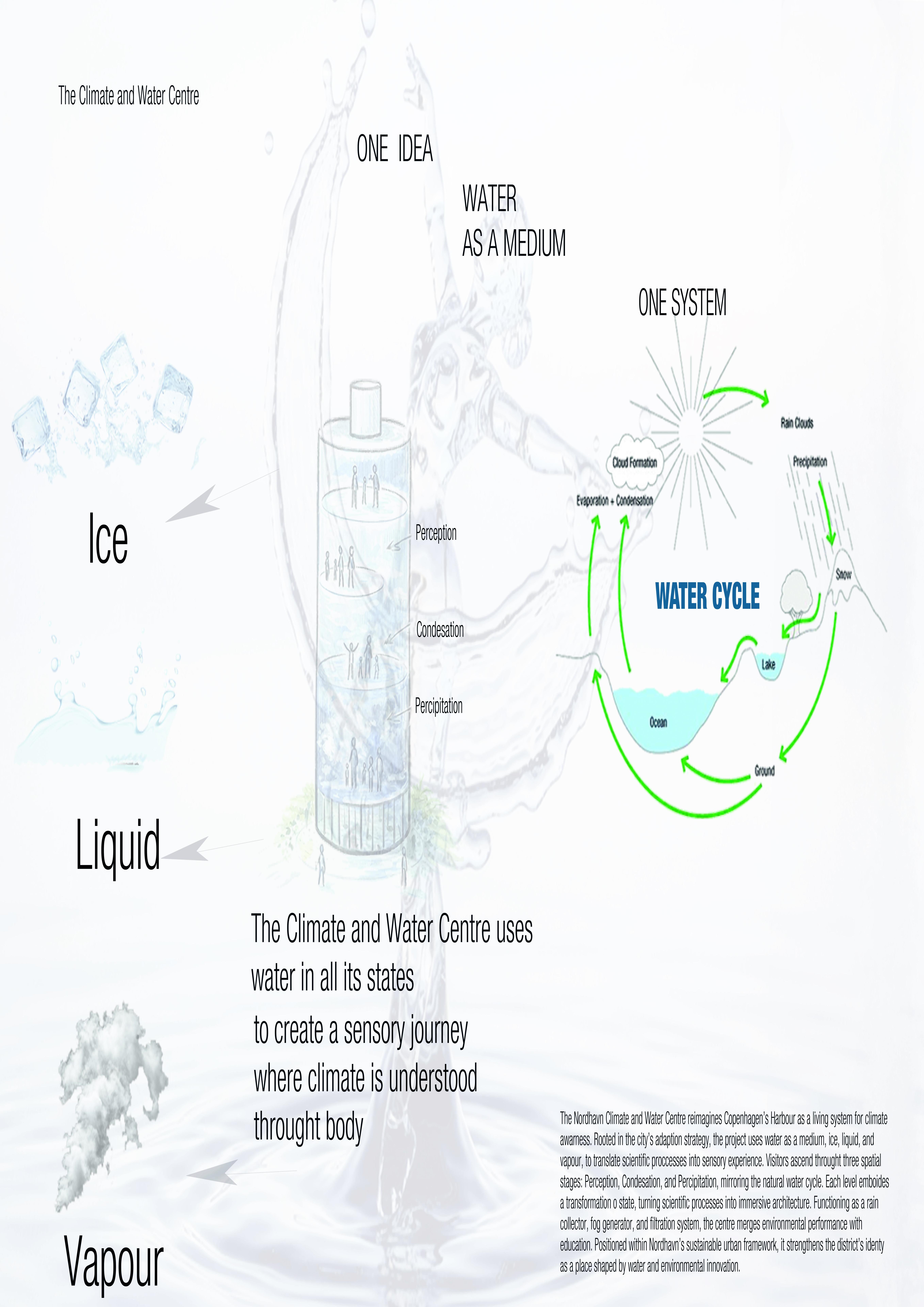
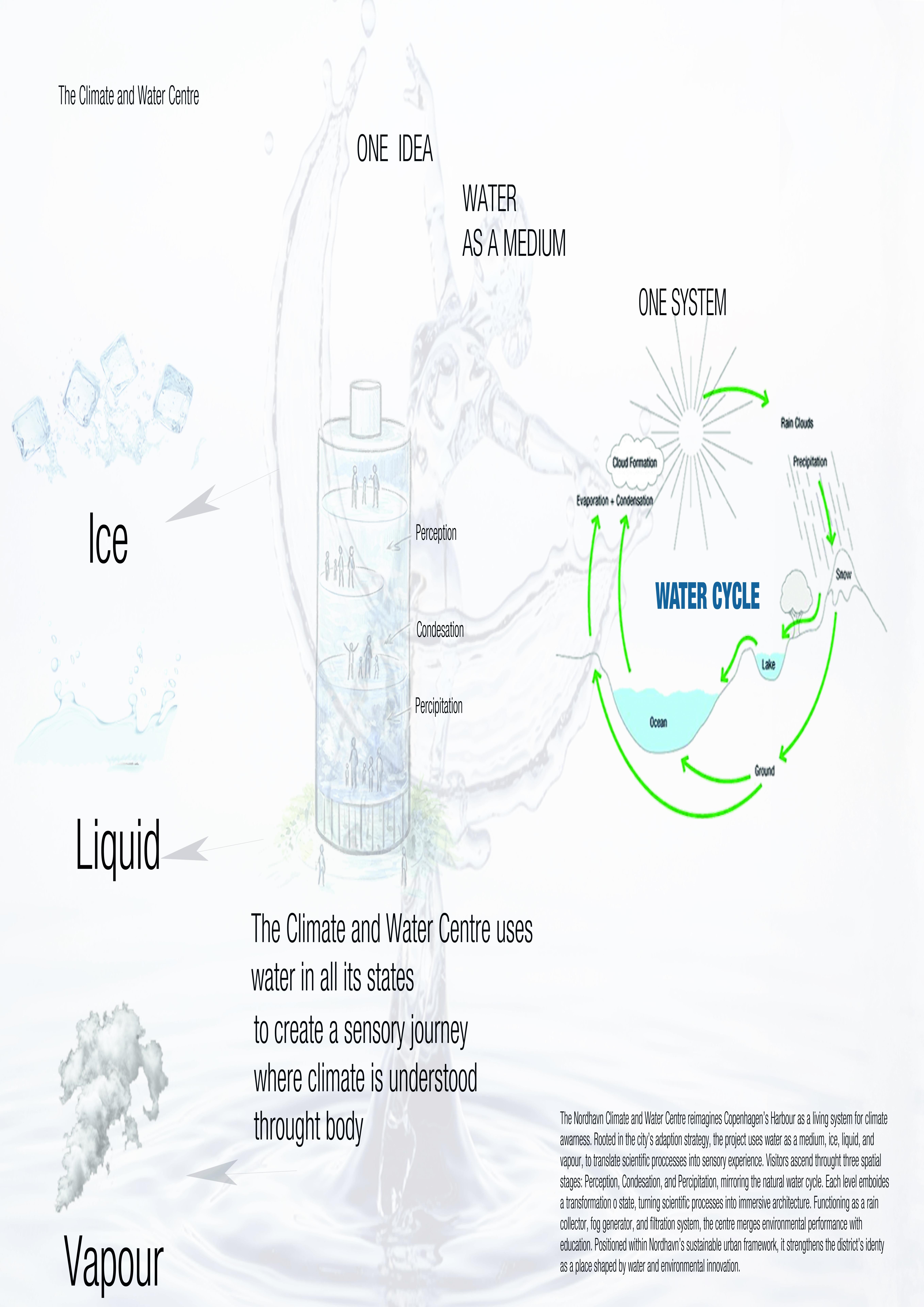
The Nordhavn Climate Centre grew from this philosophy. Set within Copenhagen’s expanding waterfront, the project investigates how hydrological cycles can inform architectural form. Each spatial layer corresponds to a stage of the water cycle: evaporation, condensation, and precipitation, creating a vertical journey that mirrors the transformation of water through climate. The building acts as a living system: collecting, filtering, and redistributing water while offering spaces for research, education, and public engagement. It’s both a scientific facility and a sensory environment, where climate is experienced through body and materials.
My design process combines hand sketching, digital modelling, and environmental simulation. I use these tools to translate abstract climate data into tangible architectural gestures, surfaces that breathe, structures that adapt, and atmospheres that shift with temperature and light. The project reflects my interest in regenerative design and community‑led adaptation, inspired by thinkers such as Ruth Lang and the principles of creative reuse.
Beyond this project, I’m passionate about sustainable retrofit and the intersection of architecture and ecology. I believe design should foster awareness, not only of space but also of the systems that sustain it.
 Architecture
  Diego Calazans De Lima Rodrigues | Architecture