Every conceptual collection operates on multiple levels simultaneously: the observation that prompted it, the visual language, and the theoretical context that explains why it matters. In The Three Acts, these three levels are distinct and serve different functions. Understanding the relationship between them is essential to understanding the collection itself.
The first level is the observed phenomenon: de-individuation, the documented, measurable, researched piece that digital anonymity systematically removes the social conditions that keep the performed self in place, causing behaviour to surface that would never appear in face-to-face interaction.
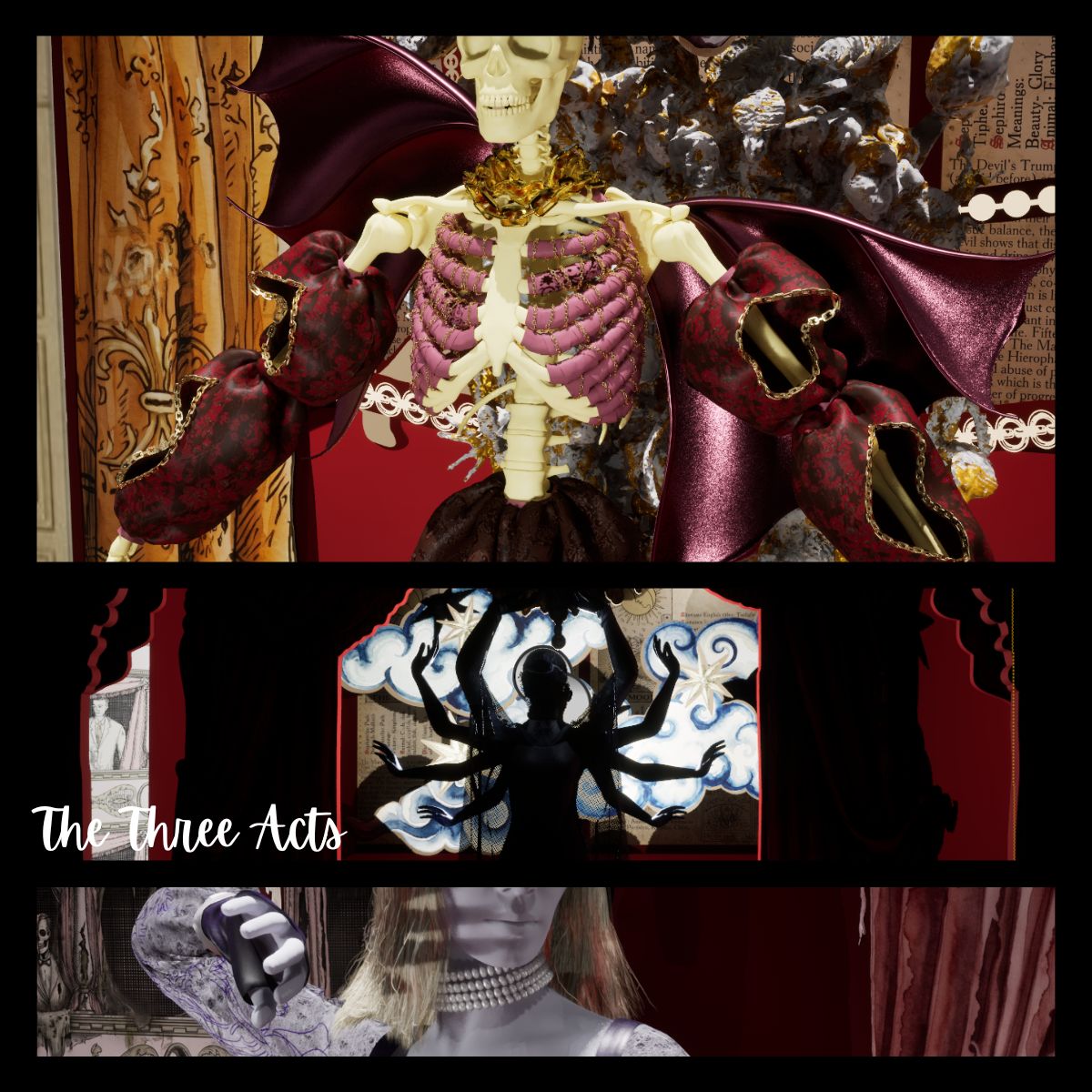
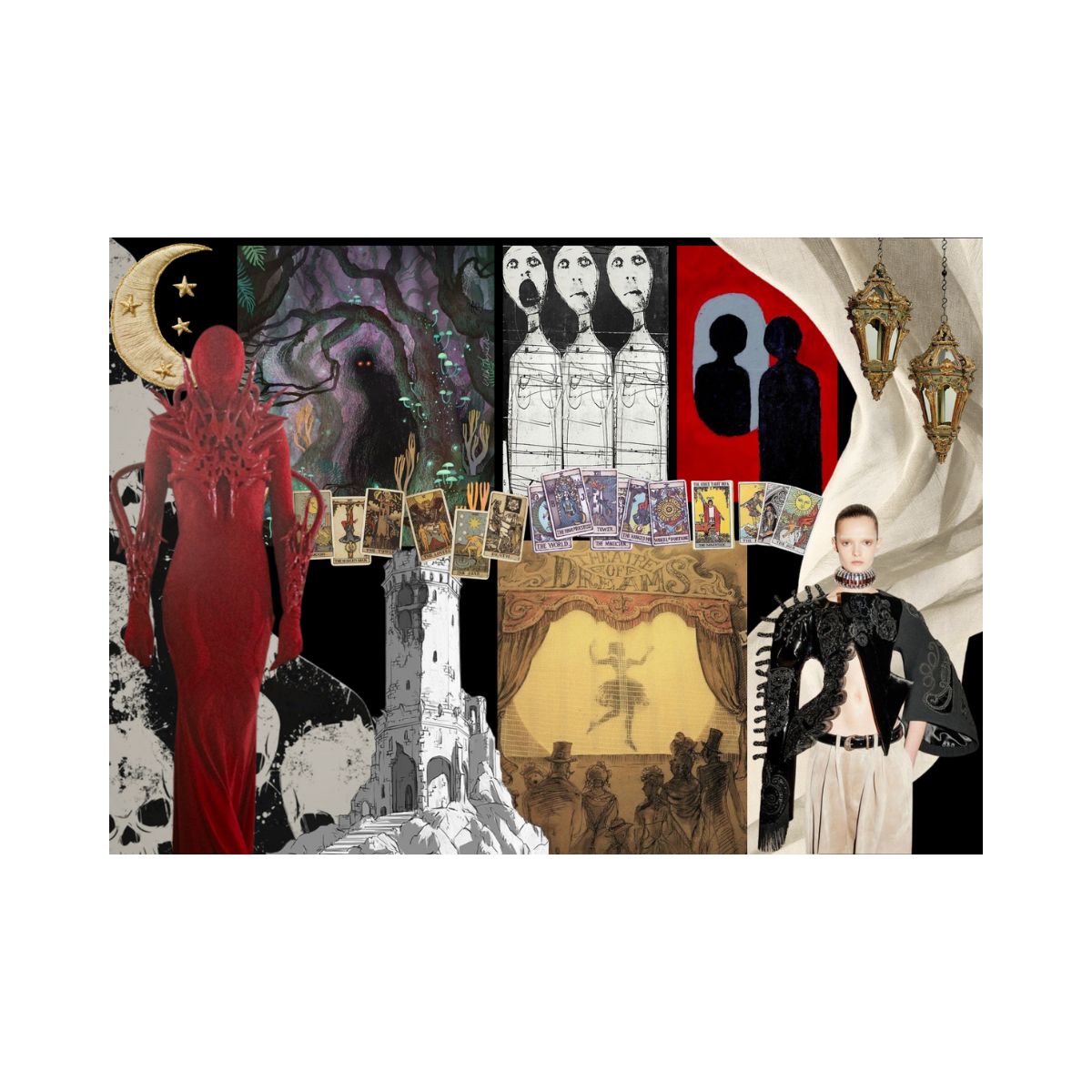
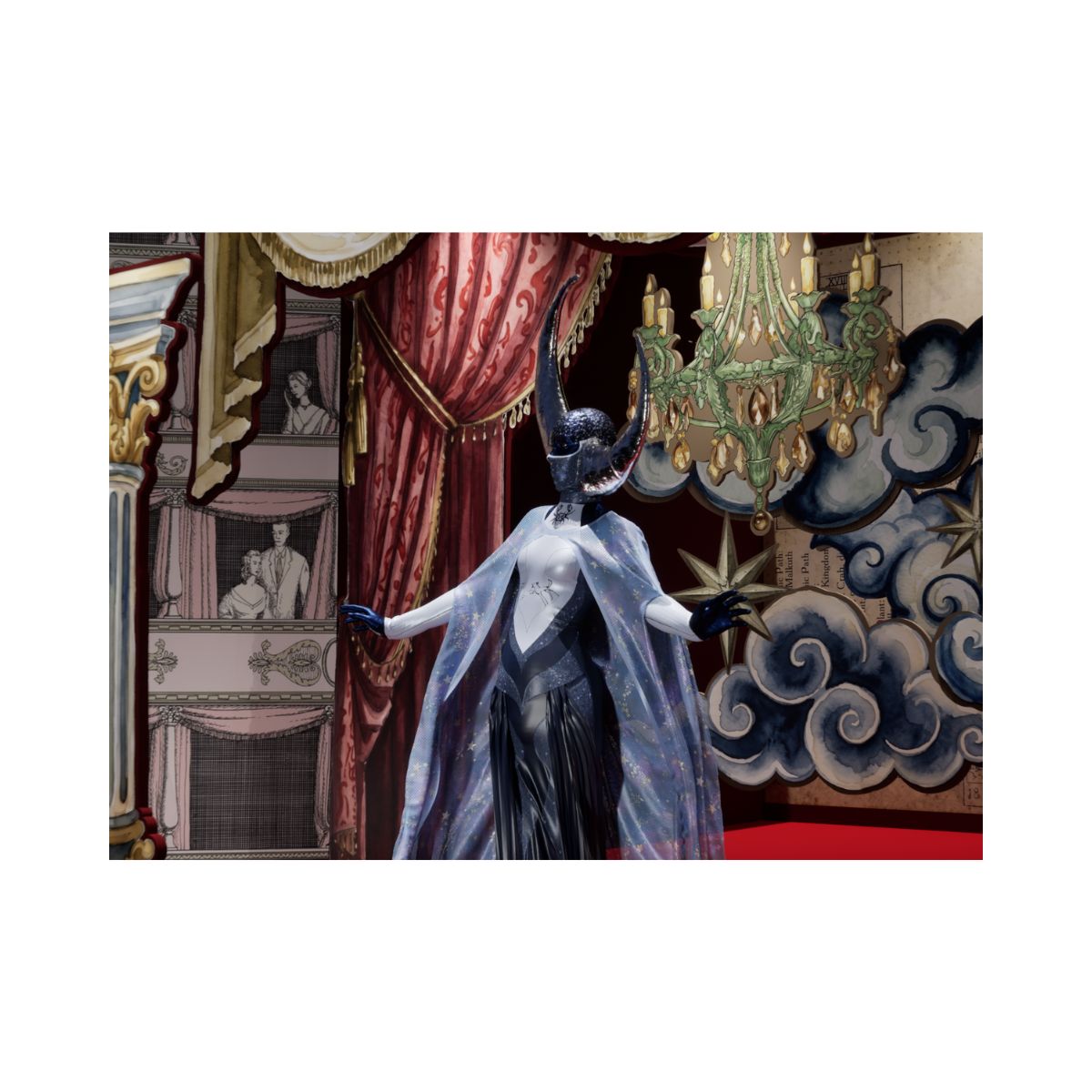
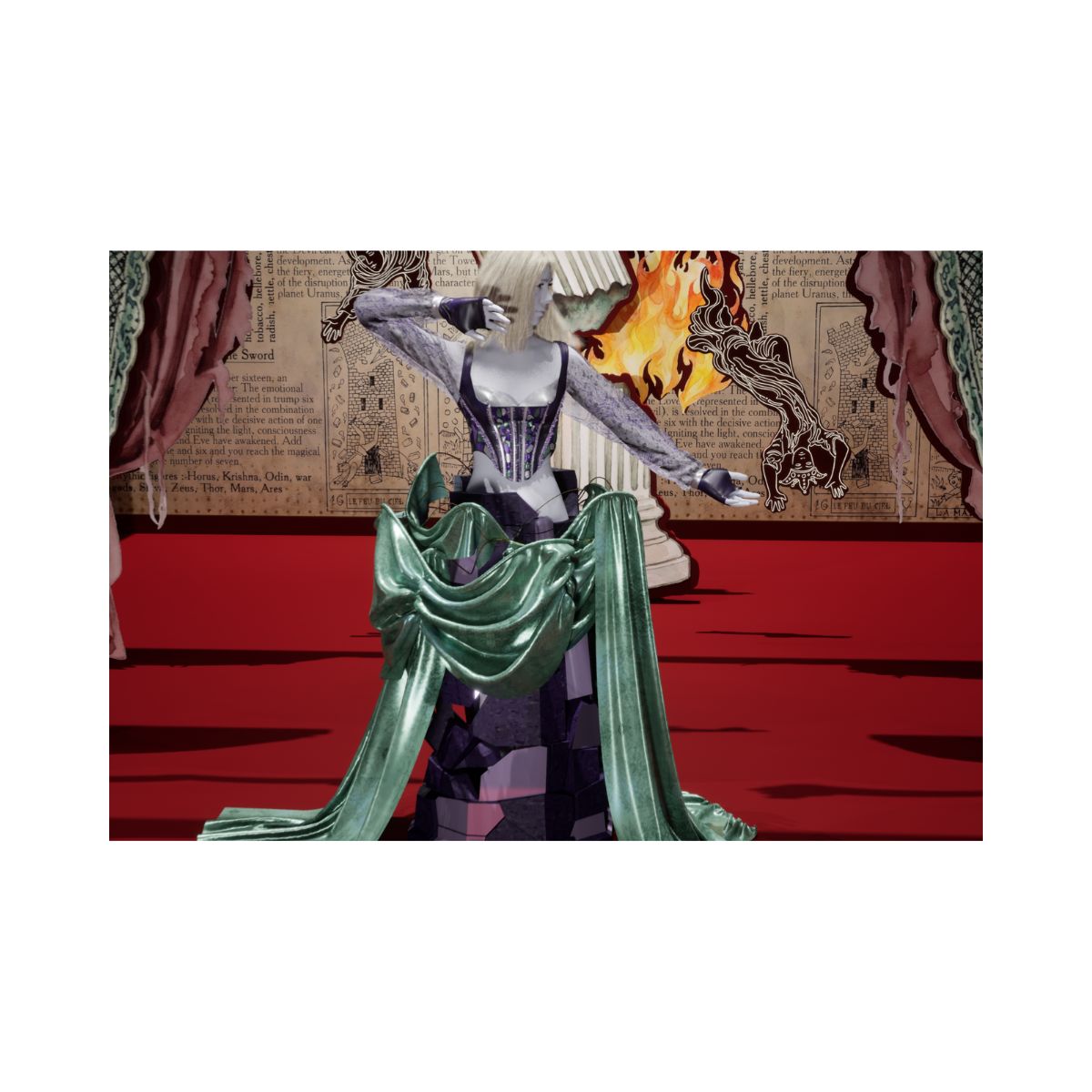
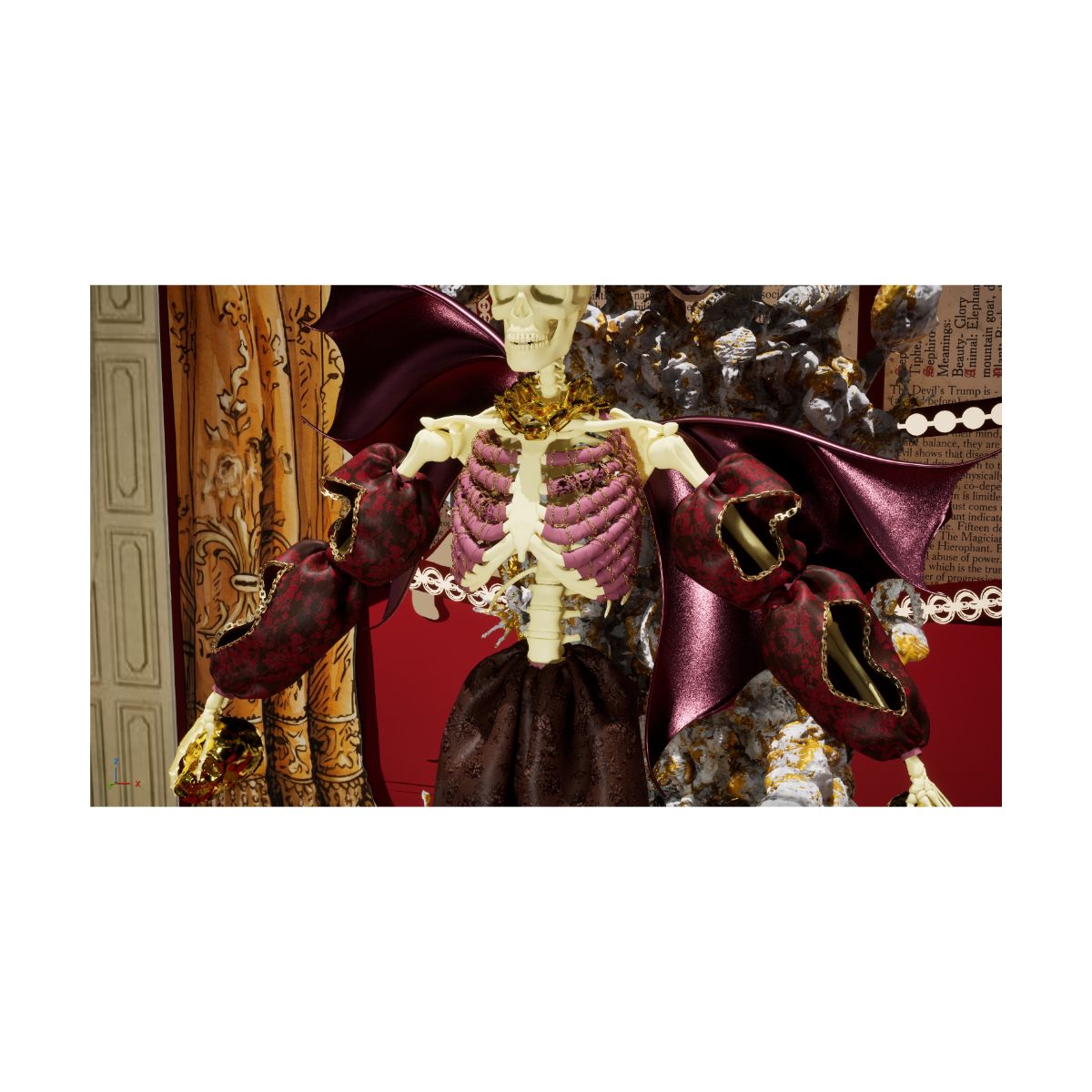
Tarot serves as the primary language of this collection, for its structural identity as a projective system. Like rigorous psychological instruments, it presents ambiguous symbols with no fixed meaning, forcing the viewer to assign significance from their own interior experience. The imagery acts as a surface, while the viewer becomes the instrument; what surfaces in this encounter bypasses the performed self to reveal unexamined patterns and suppressed material.
This methodology is essential for staging the split between the social mask and the hidden self. Because de-individuation in digital spaces is often invisible to those experiencing it, explicit imagery would make the phenomenon too simple or distant. Ambiguous symbolism removes this safety, creating the conditions for a direct internal encounter. In 2026, Tarot remains the most symbolically precise and historically established projective language available.
 Fashion & Textiles
  Chloe Howle | Fashion & Textiles