स्त्री
2026
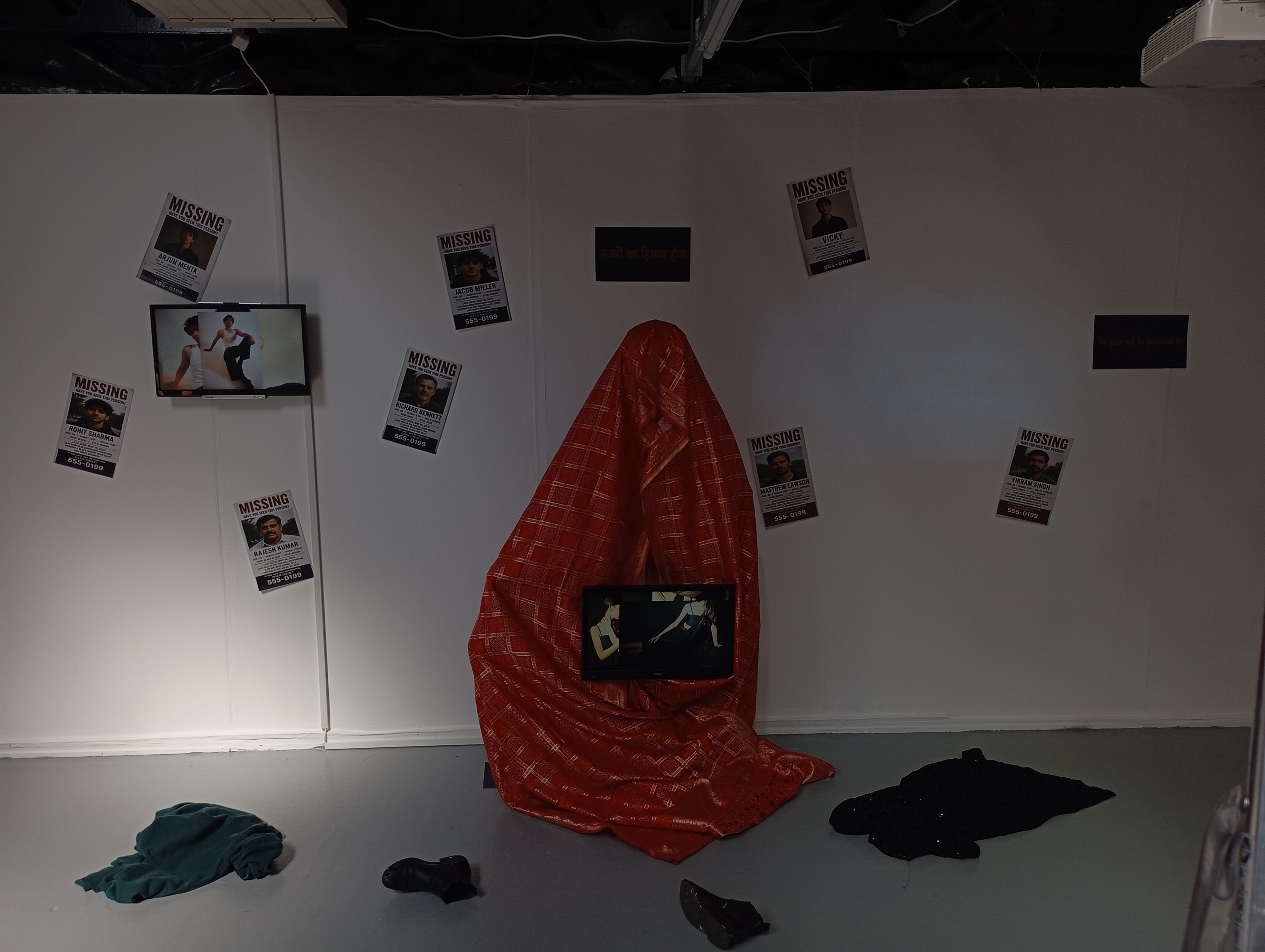
Mixed media installation: plaster sculpture, red saree, dual-channel video (looped), found garments, footwear, printed posters
‘Stree’ (स्त्री ) takes its name from the Hindi word for woman, and from the folk horror tradition (also a movie) in which a female spirit haunts a town, taking men in the night. In the original folklore, she was a courtesan whose longing to love and to leave that life behind was met not with freedom but with her death. This did not silence her. It made her ungovernable.
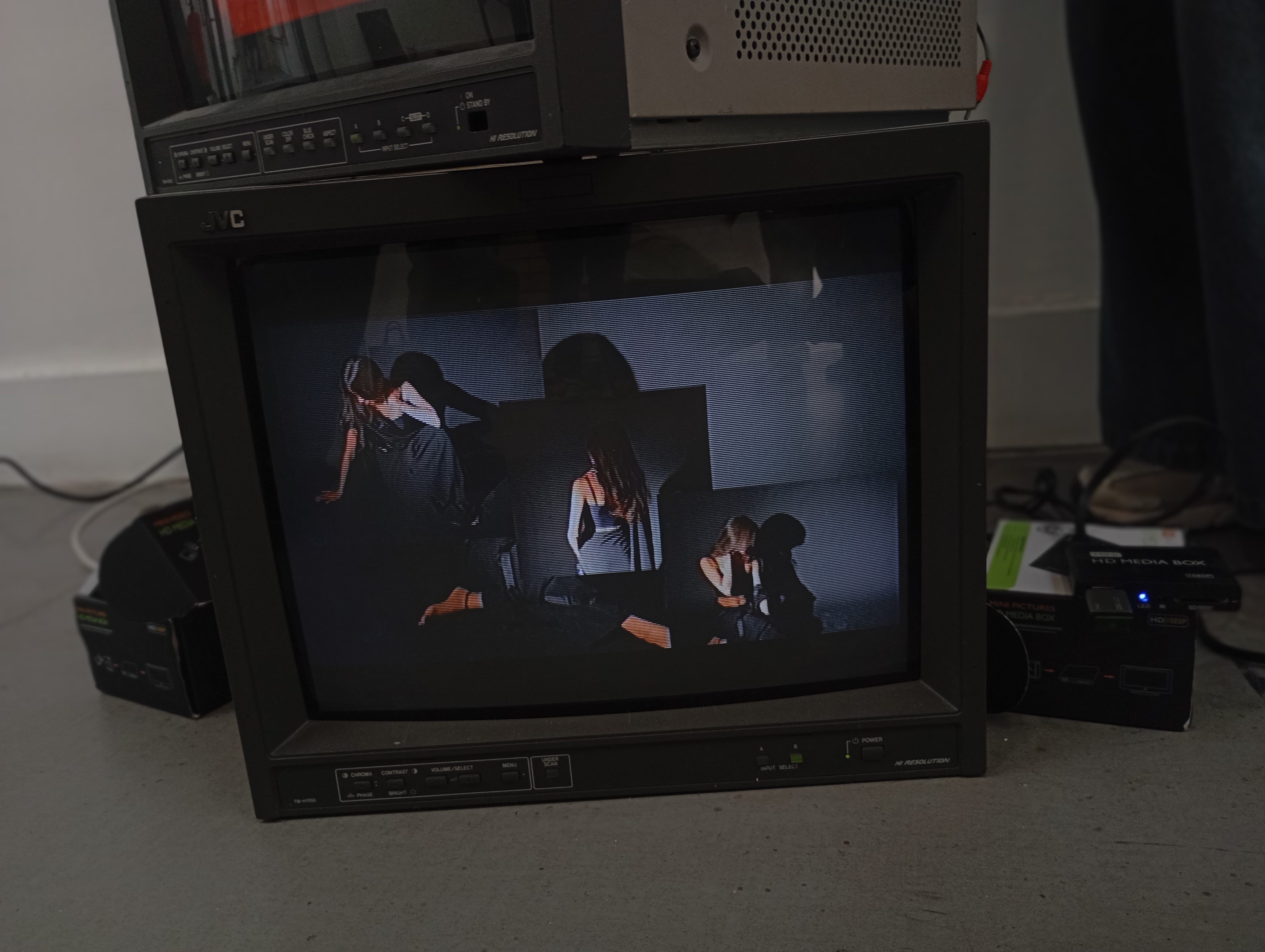
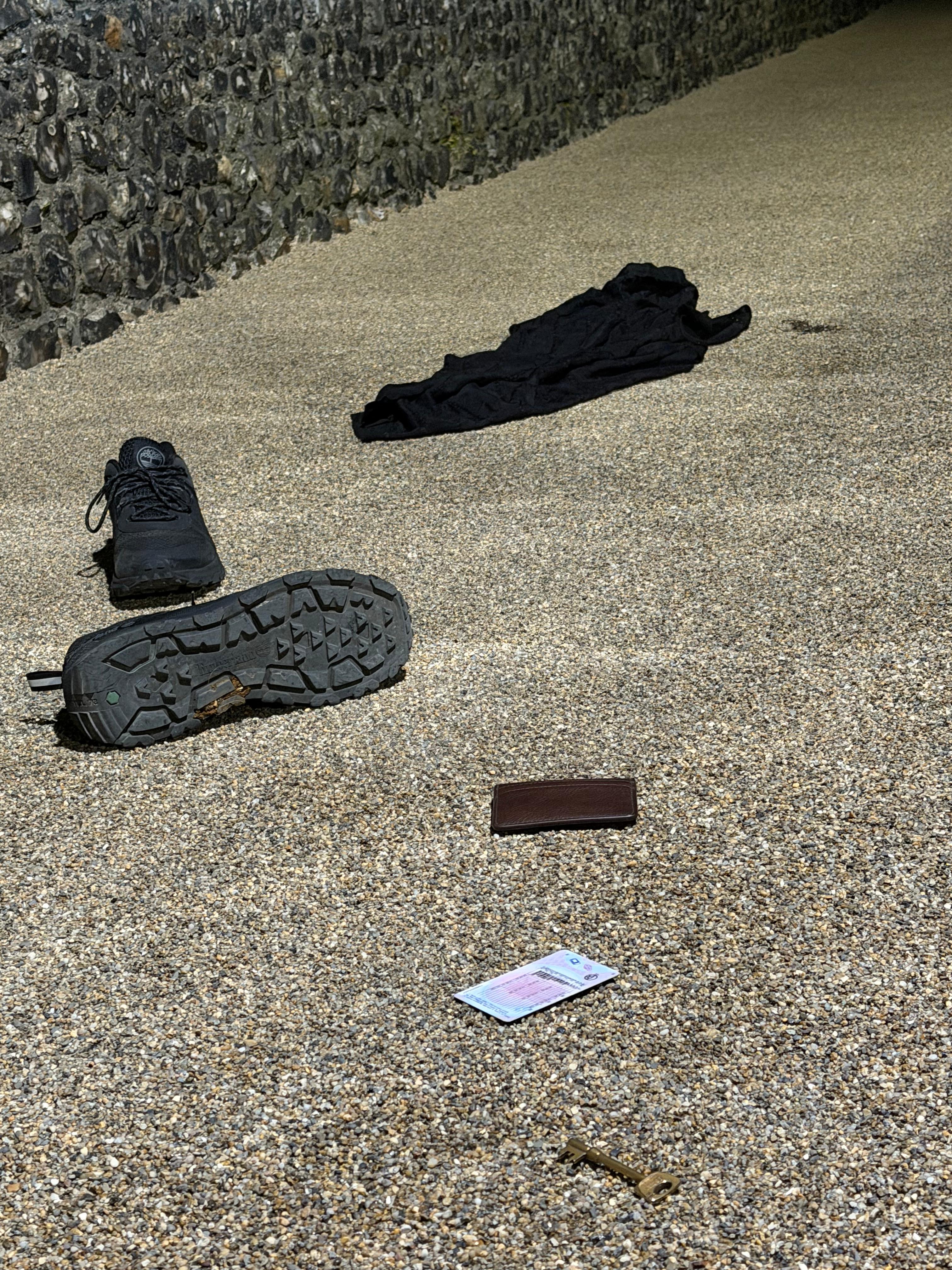
This installation lives inside that folklore. The clothes on the floor belong to men who have vanished. The missing persons posters record their absence. At the centre, a feminine figure in red saree- the colour of both danger and bridal longing in South Asian culture- holds a screen showing a woman’s body as her society has always framed it: neck, waist, collarbone, body, the language of being gazed at- as an object, without being asked.
A second screen reverses that language. Male bodies are arranged in poses of availability- reclining, open, inviting the lens to be objectified. Desire moves in the other direction now.
In the third film, Stree does not take men by force. She calls his name. She says turn around. She says I want you– and he responds to this making him disappear. This is consent- something rarely offered to women (especially like her). Men looked, passed remarks, took the female body as a public property and named this as normal. Her haunting is not revenge. It is a demonstration of how desire can be voiced, and heard, and answered. It always could have and can be.
My work doesn’t mourn missing men but asks why respect to desires and consent has not been mutual to women.
 BA (Hons) Fine Art - Canterbury
  Daniel Hickford | Fine Art