FashionCheck is my final degree project, created to help small and medium fashion brands make better product decisions before sampling or production.
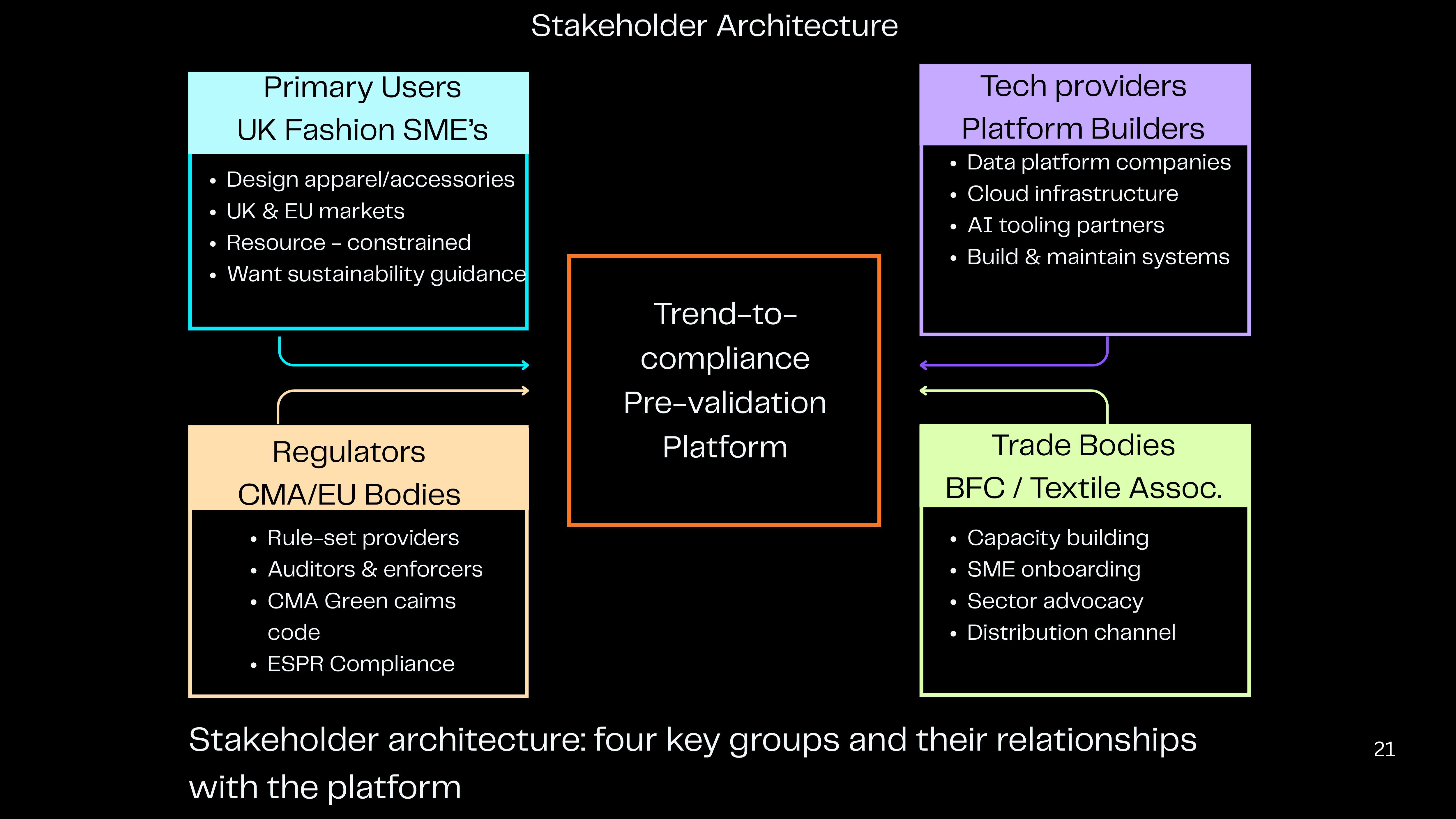
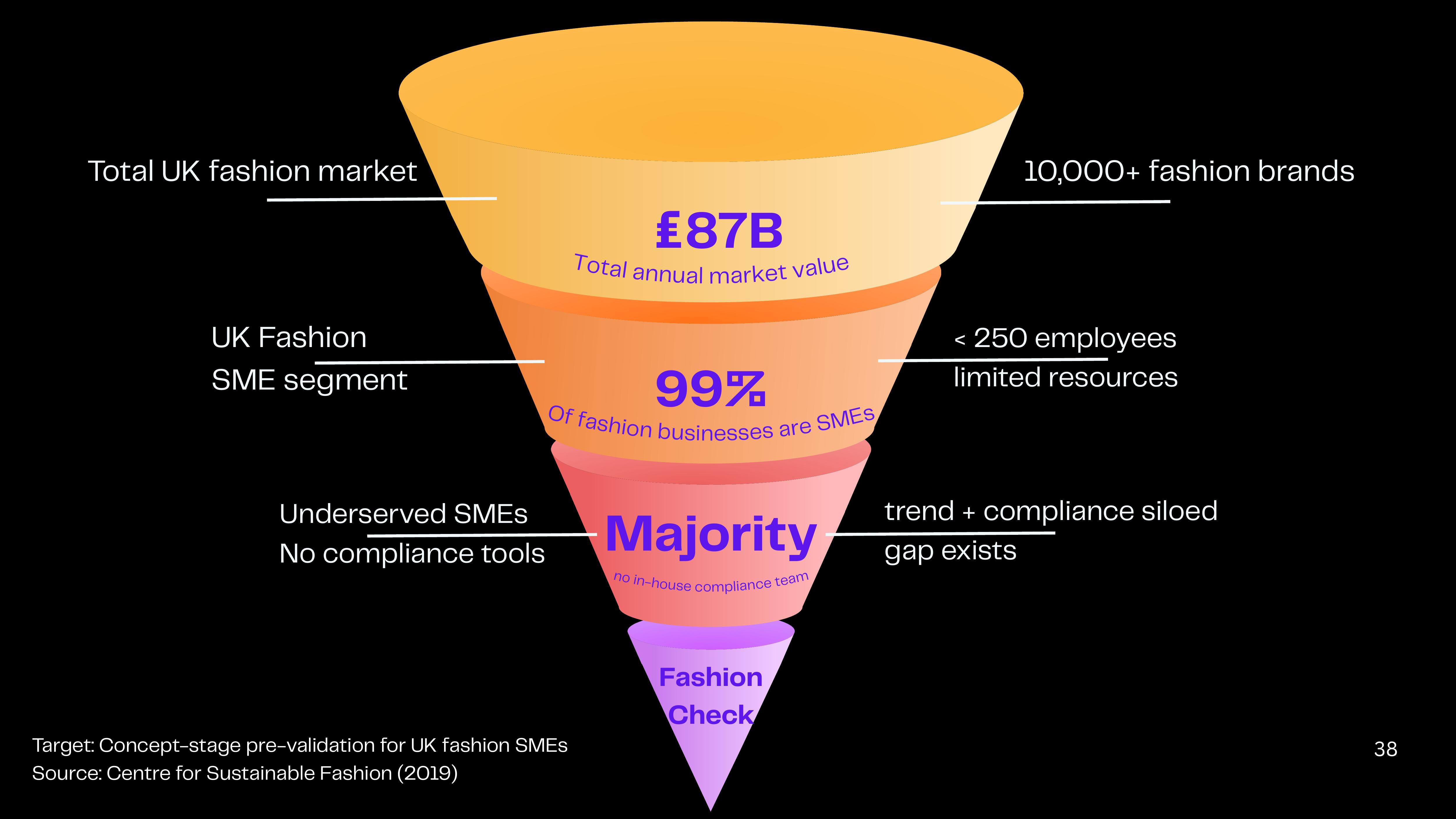
The project responds to a growing challenge in the fashion industry: brands are expected to react quickly to trends while also proving that their products are sustainable, traceable and compliant. Larger companies often have access to sustainability teams, legal advisors and data specialists, but smaller brands usually do not, even though they face many of the same pressures.
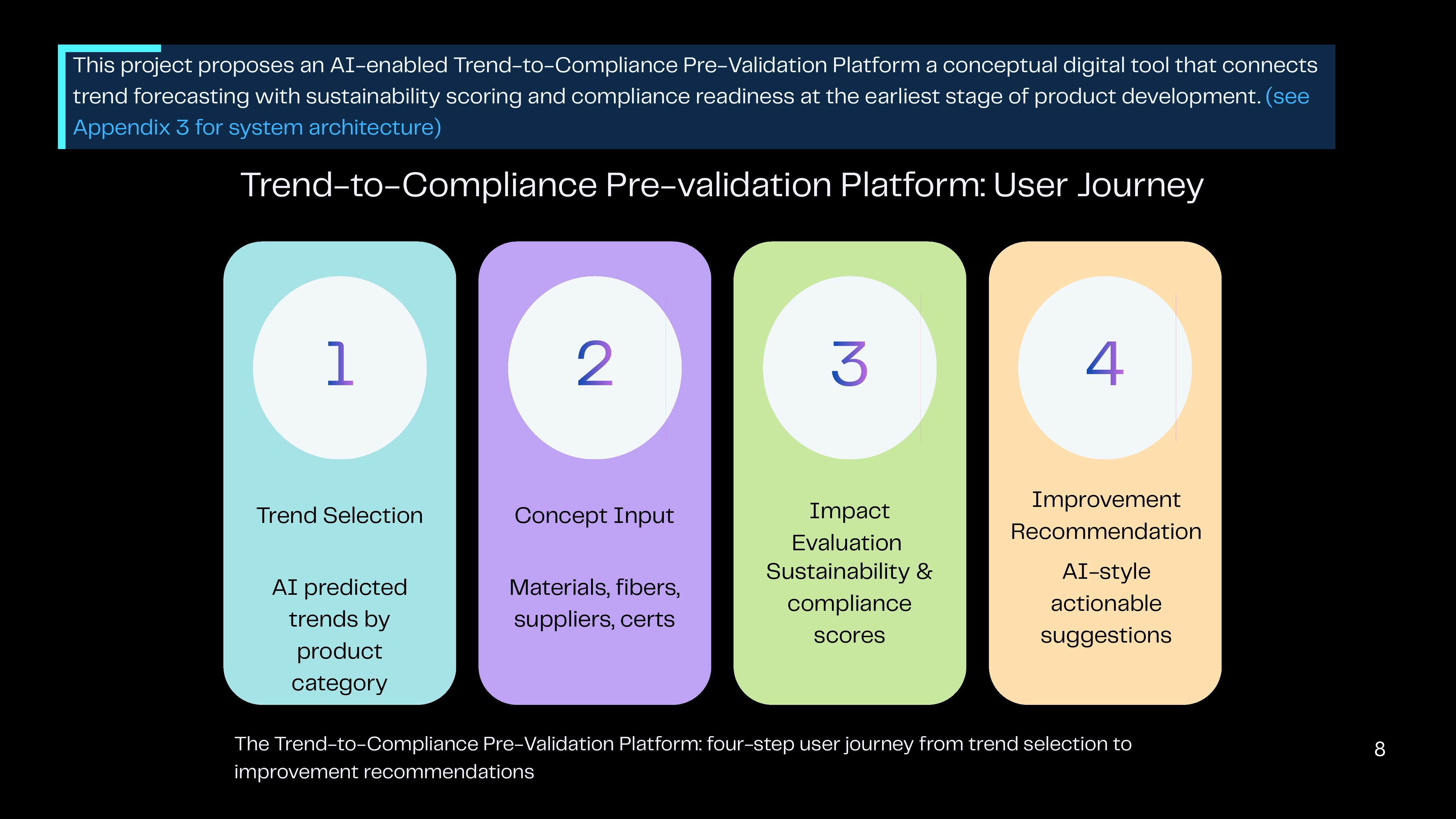
FashionCheck explores how AI can make early product decision-making more accessible. The platform allows a fashion SME to enter product details such as fibre composition, supplier region, certifications and compliance information. It then generates a sustainability score, a compliance readiness score and practical AI-led suggestions to improve the product before production begins.
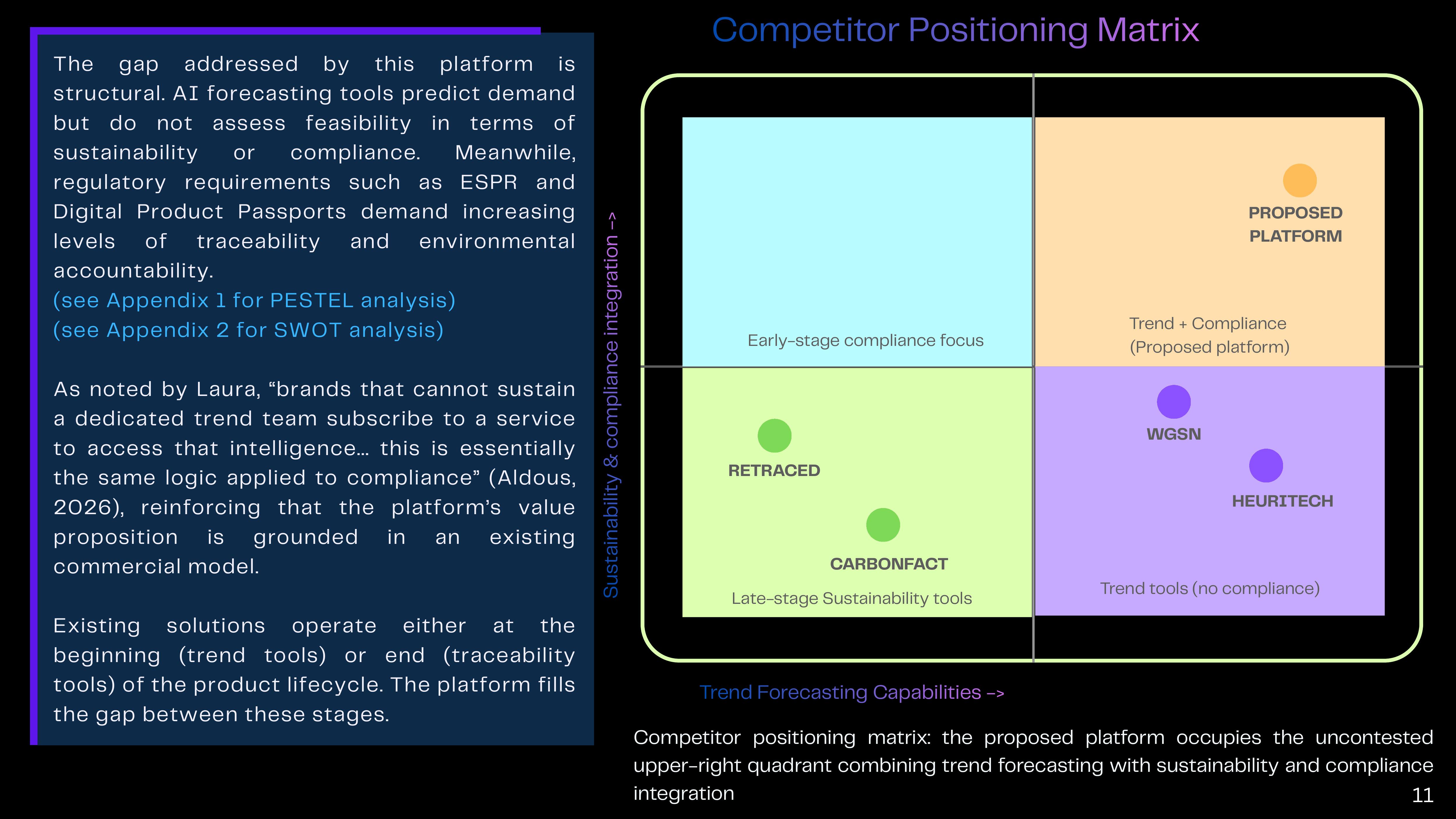
The key idea behind the project is timing. Many sustainability and compliance checks happen too late, once materials have already been chosen, suppliers have been contacted and sampling has started. At that point, changing direction can become expensive and difficult. FashionCheck moves this thinking earlier, helping brands understand potential environmental, compliance and communication risks while decisions are still flexible.
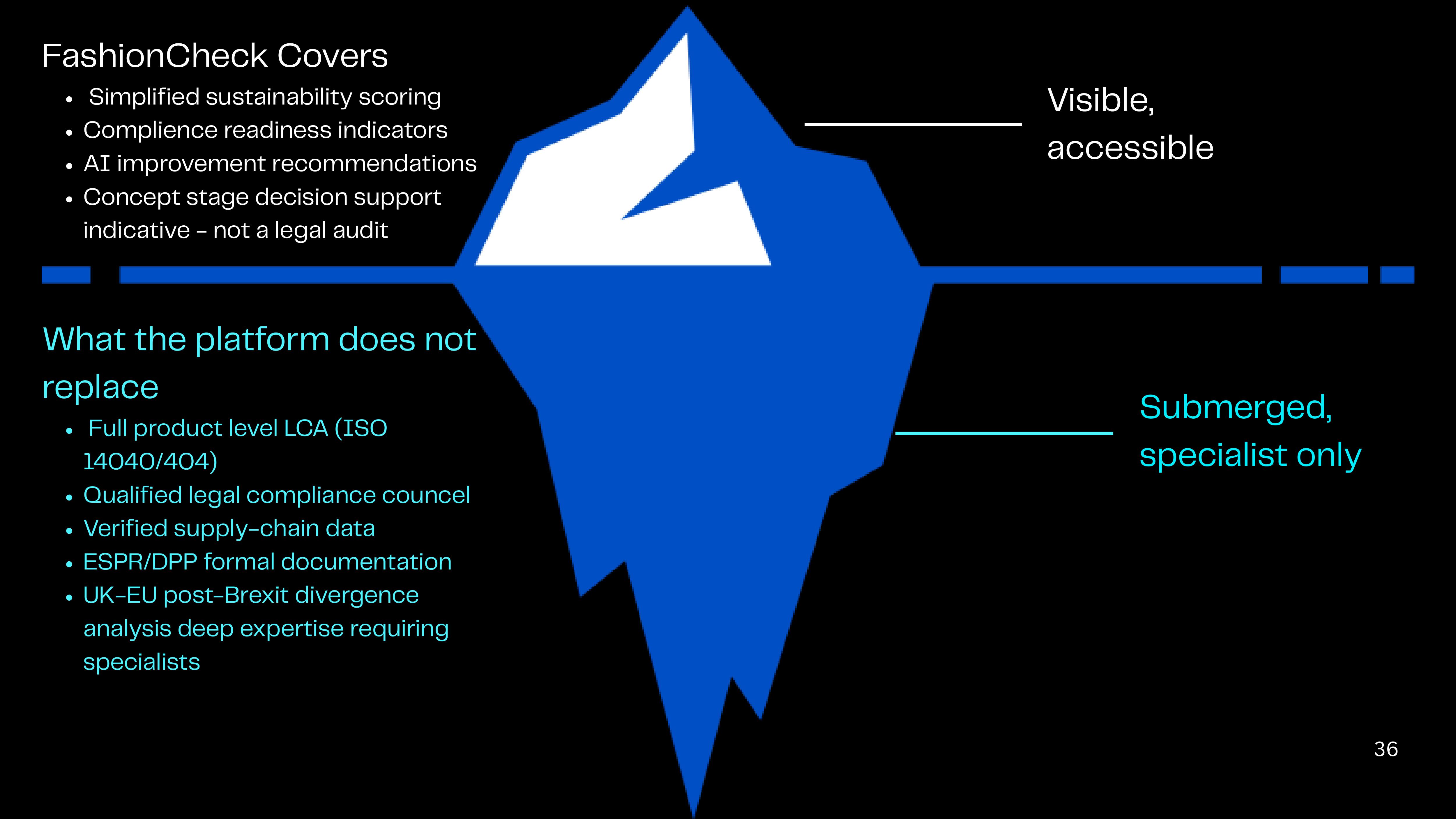
The platform is designed as a decision-support tool, not a replacement for legal advice or a full Life Cycle Assessment. Its purpose is to give emerging brands an early warning system: clear enough to understand, practical enough to act on and structured enough to support better product development.
I developed a working prototype using Python and Streamlit, combining fashion trend intelligence, sustainability regulation, Digital Product Passport thinking, UK green claims guidance and AI-supported recommendations. The prototype includes a trend forecasting screen, product pre-validation inputs, a scoring dashboard, AI suggestions and partner recommendations.
Through FashionCheck, I wanted to move beyond simply identifying problems in fashion and instead design a practical tool that supports better decisions at the moment those decisions matter most. For me, the project represents the intersection of fashion business, sustainability, data analytics and AI, and reflects my interest in how technology can make responsible innovation more accessible for smaller brands.
 BA/BSc Fashion Business & Management
  Hearte Ho | Business & Management