T H E G R E A T I N F I L L | J A C K C I R K E T
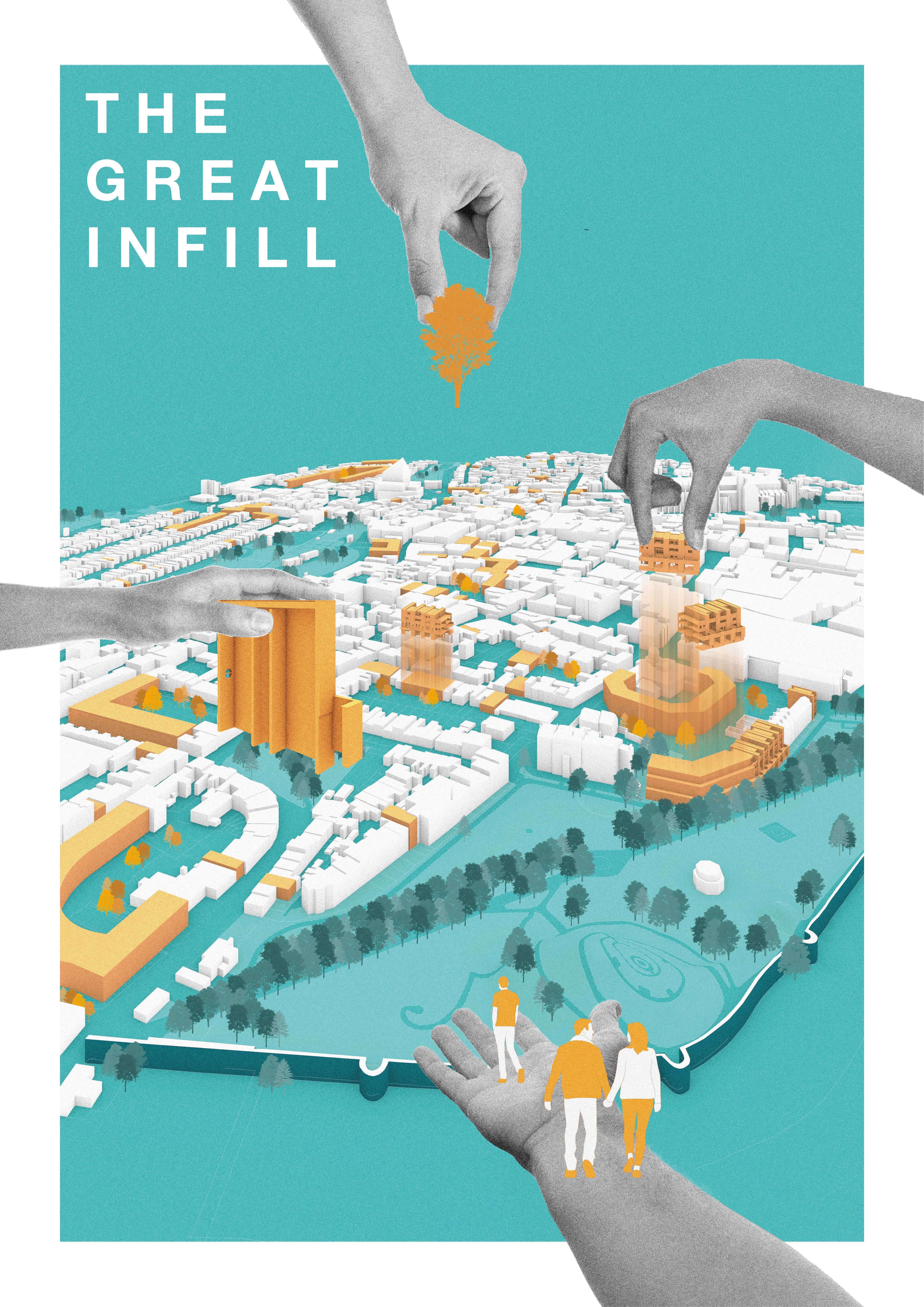
The Great Infill reimagines Canterbury’s future through inward growth rather than outward expansion, transforming overlooked and underused spaces within the city centre into opportunities for sustainable urban living. Rather than a series of isolated architectural interventions, the project establishes a framework for the Eco-Densification movement through low-rise, high-density live/work housing, integrated ecology, and material reuse.
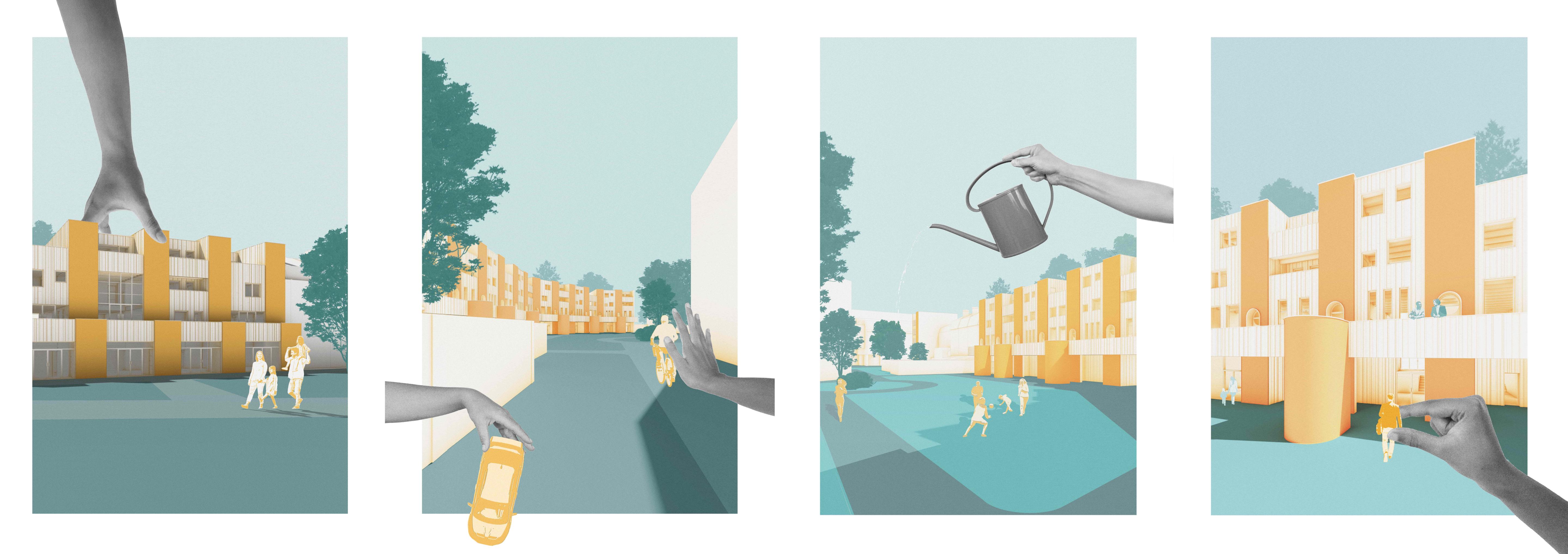
Operating across Canterbury’s city centre, the project introduces a network of interventions that reconnect fragmented urban spaces, improve the public realm, and reinforce the city centre as a place of living and working. Public gardens, communal courtyards, terraces, and green spaces are embedded throughout the strategy, integrating ecology directly into the urban fabric and encouraging a more localised way of life.
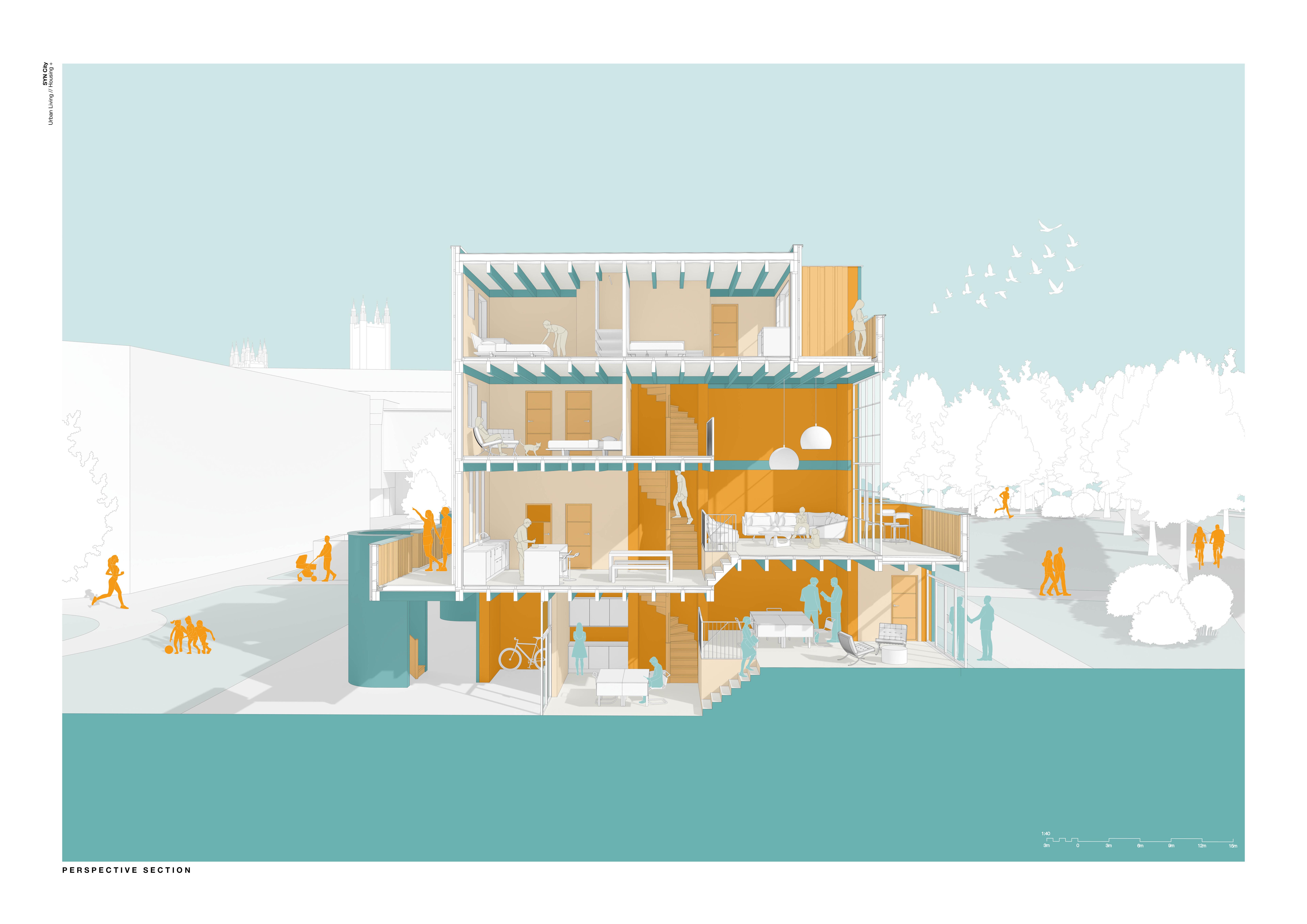
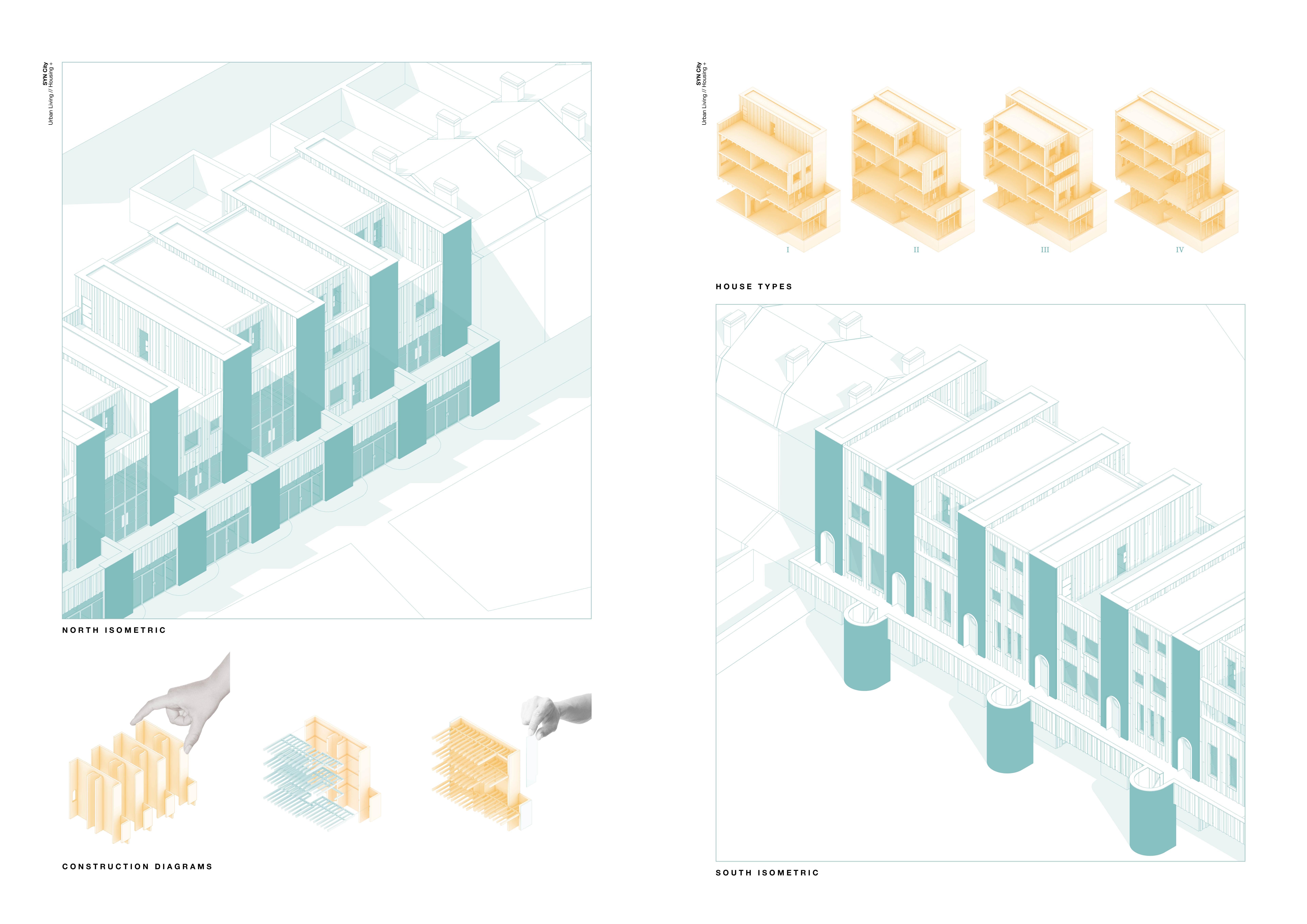
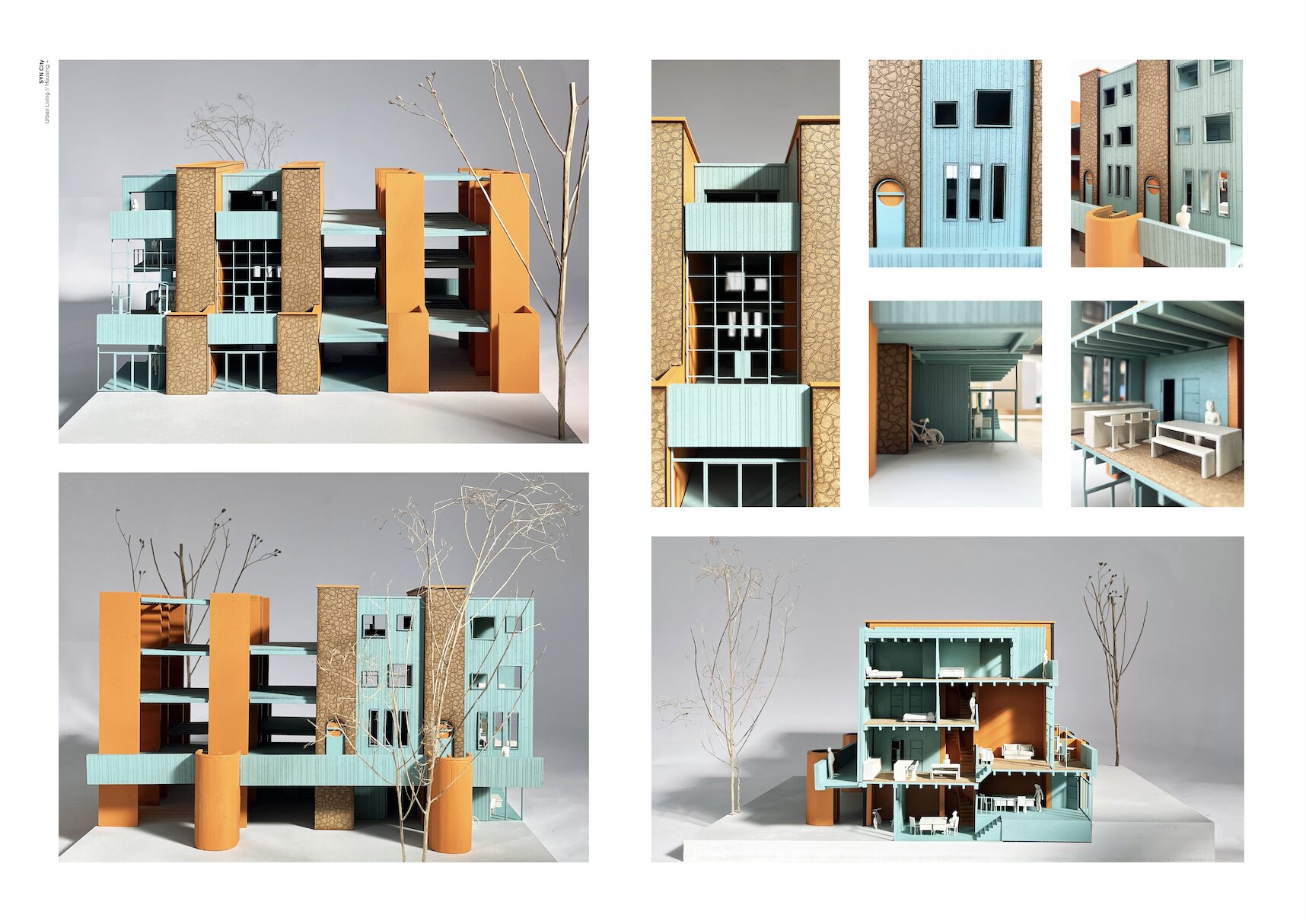
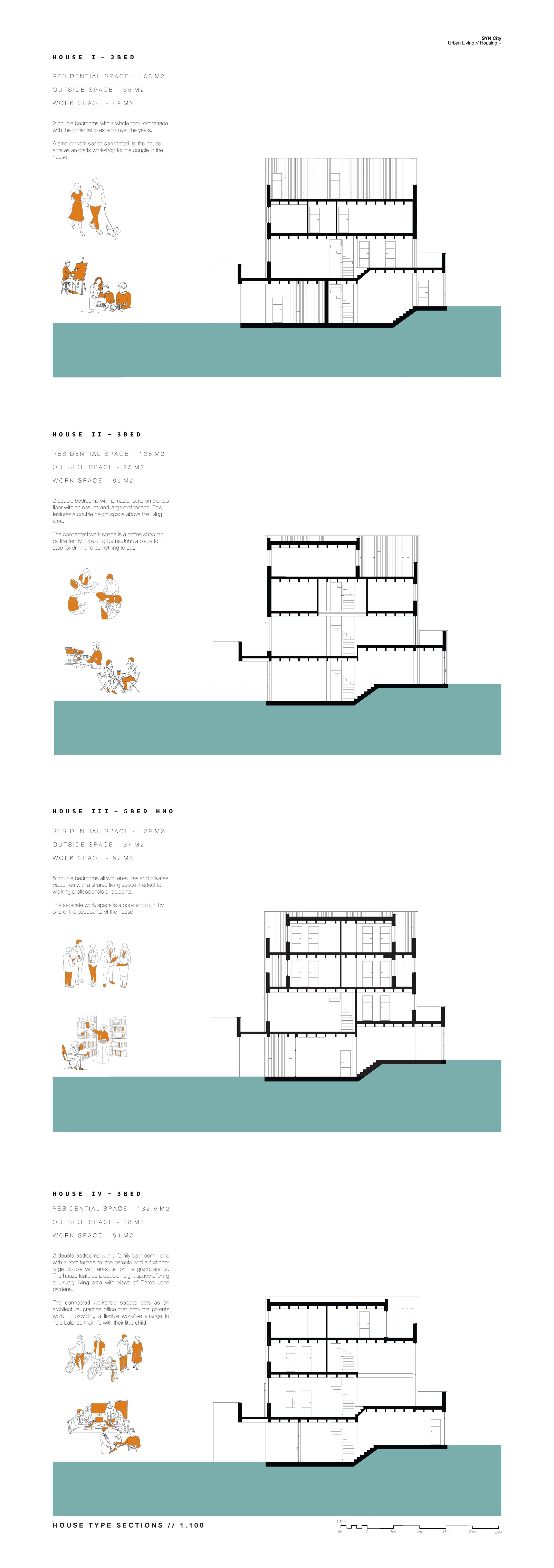
Watling Street acts as a test site for how these principles can be realised architecturally and materially. Drawing from the surrounding grain, rhythms, and movement of the city, a four-storey live/work prototype is developed as a model for future infill housing. Designed around adaptability, the proposal explores four potential live/work arrangements, focusing in detail on a dwelling occupied by a family running an architectural practice.
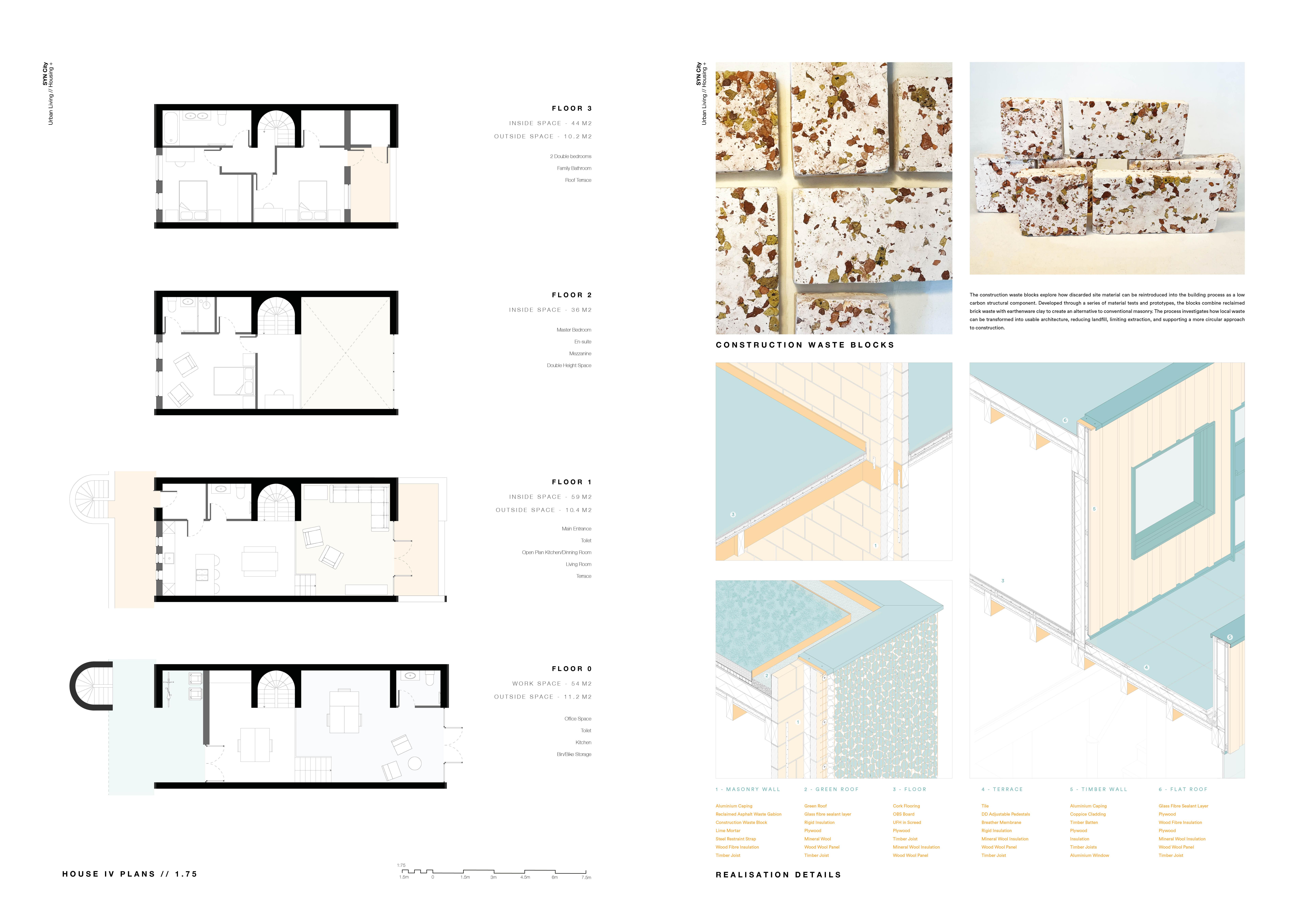
At the centre of the design is a solid masonry service wall constructed from blocks made using reclaimed construction waste sourced directly from the site. Acting as the structural and organisational backbone of the building, the wall contains stairs, storage, entrances, and bathroom facilities. Timber beams span from the wall to create flexible internal spaces capable of adapting over time.
The dwelling is arranged across three floors above a ground-floor workspace operating as an architectural office. While the workspace can function independently, it remains connected to the home, reinforcing the relationship between domestic and working life. A dual entrance system separates public and private functions, allowing the office and house to operate together while maintaining distinct identities.
Materiality forms a key part of the environmental strategy. Construction-waste blocks, coppiced timber cladding, and recycled asphalt are integrated throughout the proposal to reduce embodied carbon and support local material economies. Recycled asphalt is reused within gabion rainscreens and vertical gardens, linking waste reuse directly with the ecological ambitions of the scheme.
Through adaptable live/work housing, greenification, and the reuse of construction waste, The Great Infill demonstrates how Canterbury can grow sustainably from within, positioning architecture as part of a wider urban and environmental system.
 Architecture
  Lottie Wild | Architecture